News

Bau-Xi Photo exhibiting at Photo London 2018

Barbara Cole and Joshua Jensen-Nagle, presented by Bau-Xi PhotoBau-Xi Photo is thrilled to announce that we will be returning to Photo London for the second consecutive year. We will be exhibiting works by Toronto-based photographers Barbara Cole and Joshua Jensen-Nagle. 

As one of only a few exhibiting Canadian galleries, we are proud to be presenting artwork by two notable Canadian artists at an international venue. We would like to thank the Canada Council for the Arts for supporting us this year.

Somerset House, London 
May 17-20, 2018 
Read more about Photo London 


VIEW JOSHUA JENSEN-NAGLE'S COLLECTION ONLINE  
VIEW BARBARA COLE'S COLLECTION ONLINE


Read more

Katrin Korfmann | The Making Of


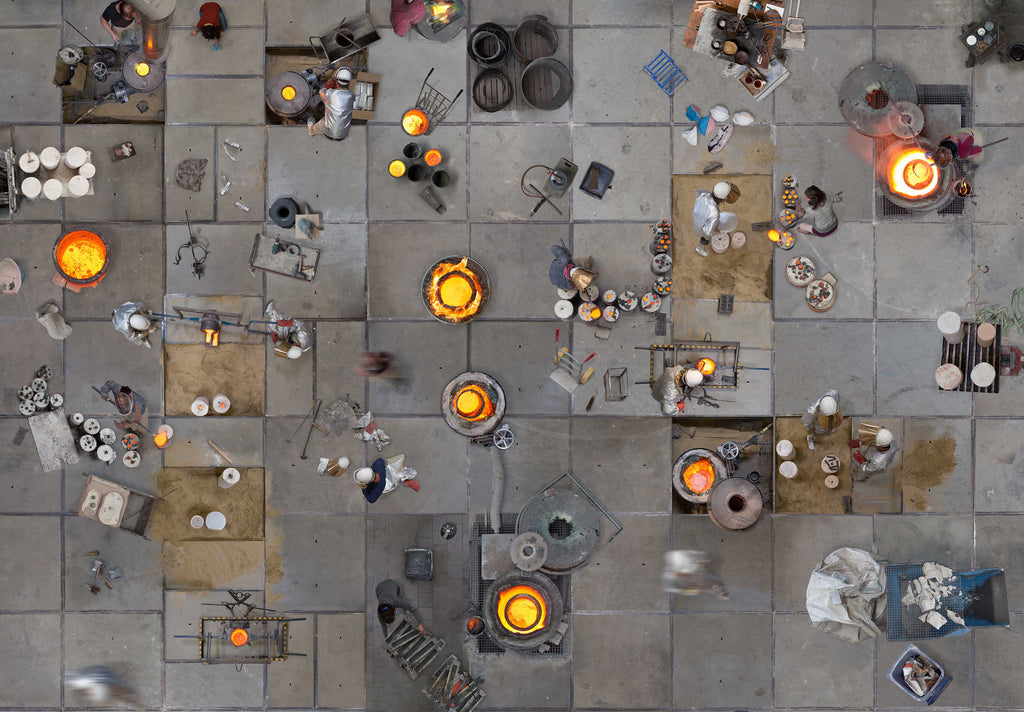
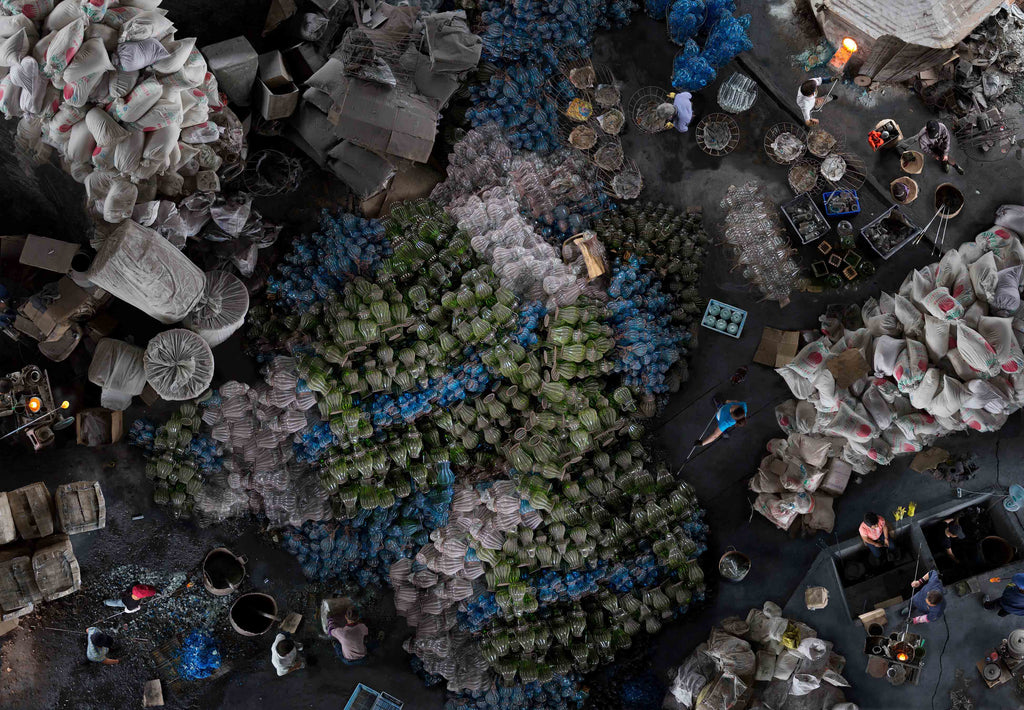
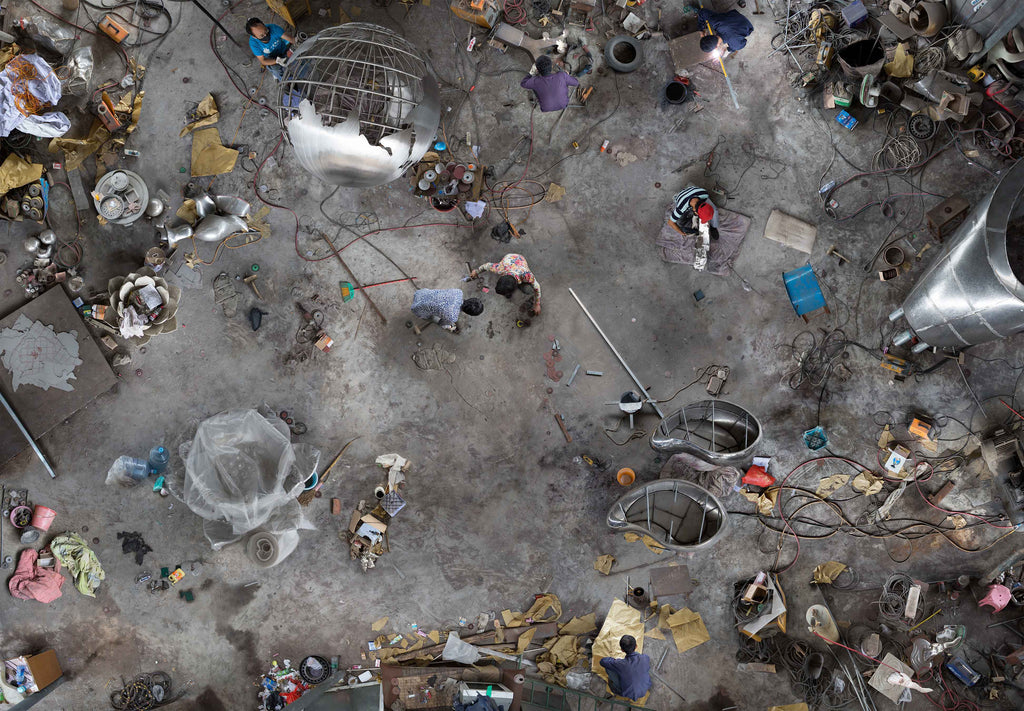
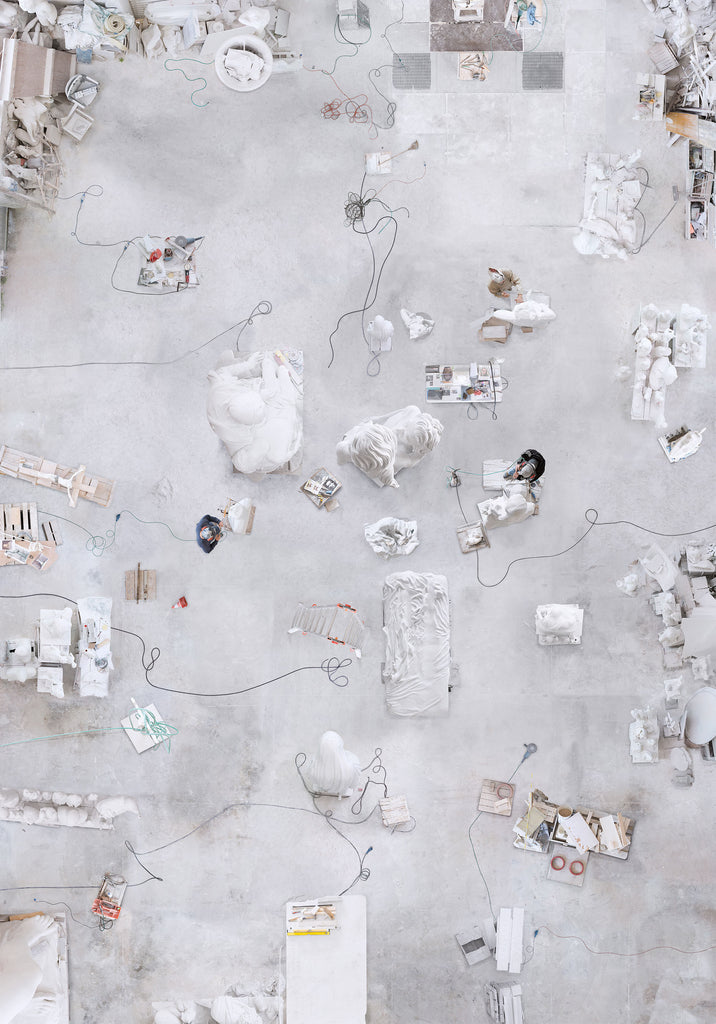
Katrin Korfmann, Marble, Carrara, 2017 (in collaboration with Jens Pfeifer), Archival inkjet print on archival substrate.
 
We are pleased to announce that works by Katrin Korfmann are featured in The Making Of, a group exhibition at the Dutch modern art museum, 38CC. Her latest series, Back Stages (in collaboration with Jens Pfeifer), is featured alongside 
works by artists Adrian Paci and Peter Jordaan.

Click here to read more about Korfmann's series, Back Stages 

CLICK HERE TO VIEW KATRIN KORFMANN'S COLLECTION ONLINE 


Read more

Barbara Cole | Featured at the Art Gallery of Hamilton

Finale

Barbara Cole, Finale, from White NOise

The upcoming exhibition, Water Works, at the Art Gallery of Hamilton will feature work by Bau-Xi Gallery artist, Barbara Cole.

The featured image, titled Finale, is from Cole's acclaimed White NOise series. Here the artist explores the medium of water as a natural lens which refocuses and reinterprets a painterly aesthetic. Inspired by its inherent reflective quality, Cole uses the underwater environment to challenge our perception of the figure in space. 

Water Works highlights the various ways in which artists have used water as an artistic medium, investigated its unique properties (liquidity, transparency, movement, reflection), interrogated its role in the spiritual and psychological aspects of our lives, and advocated for the preservation of clean water.

The exhibition runs 
February 10 - May 27, 2018 at the Art Gallery of Hamilton. Click here for full exhibition and event details. 

Curated by Christine Boyanoski. 

CLICK HERE TO VIEW BARBARA COLE'S COLLECTION ONLINE 


Read more

From the Archives: Alex Cameron

Alex Cameron

Alex Cameron pictured in The Globe and Mail, October 23, 1973

In anticipation of Alex Cameron's upcoming exhibition, we take a look back at a few notable moments from the early days of his long-standing career. 

1977: Cameron is honoured as one of the artists included in the "14 Canadians: Critics Choice", at the Smithsonian Institution, Washington D.C. 

Alex Cameron

Alex Cameron

Alex Cameron


1978: Cameron discusses his inspiration and process in Uptempo, Ottawa

Alex Cameron

Photo credit: Ottawa Citizen, February 10, 1992

Alex Cameron

Oxern, Pearl. “'Challenging crudity' not as spontaneous as it seems, says the artist.” Uptempo, 1978, p. 38.

1986: Cameron is featured in The Art Post 

Alex Cameron in The Art Post

 Alex Cameron featured in The Art Post

Moldofsky, Mitch . “Spring Showings from Alex Cameron to Humanist Paintings to Colour Photograms .” The Art Post, 1986, pp. 5–6.

Alex Cameron

Alex Cameron, Supermoon, Hale Bopp & Stars, 72 x 72 in. 

In the latest series of paintings by Alex Cameron, the artist turns his gaze skyward. Celestial objects—super moons, constellations, and comets—blend with terrestrial phenomena like fire embers, snow, and cloud formations to create energetic landscapes in a style unique to Cameron and his over 40 year long career.  David’s Bonfire refers warmly to an evening at the Rideau Lakes, when the artist spent time with long time friend and fellow painter David Bolduc on holiday with their families. The occasion--fondly remembered--included lively painting sessions, and what Cameron refers to as a "kitchen show:" watercolours adorned the cottage walls, and were later exchanged between artists, and taken home to be cherished for years. Memory, then, becomes for Cameron a proverbial bridge, connecting and uniting land, sky, and stars.

Alex Cameron’s paintings have been collected extensively in Canada and abroad. Notable collections include the Art Gallery of Ontario, the Royal Bank of Canada, and The Queen’s Silver Jubilee Art Collection. He lives and works in Toronto. 

David's Bonfire
February 3-17, 2018
340 Dundas St West, Toronto
Opening Reception: Saturday February 3, 2:00 - 4:00pm

VIEW THE FULL COLLECTION 

Read more

Artist Q & A: Vicky Christou


1) What intangible or immaterial moments are you most interested in representing through your work?

I am interested in painting a visual and materially formed record of time. This record of time is created by way of a visual methodology of paint application and reactive decision making. 

Meditation and contemplation are part of my toolkit. I seek to evoke an internal state where a passage of time is experienced, and physically recorded by a calendar of sorts - the grid created by painted layered impasto lines. 

I like the analogy of duplicity and what it reveals: what we first see and know, and what light and shade reveal to us from different vantage points and at different times.  I find that transitory passage inspiring and poetic, like watching the day`s light fade into evening.  Those are the moments that I want to integrate into my work.


2) What kind of material properties have you observed through the act of painting? How does colour or your perception of colour change as you apply paint layer upon layer? 

The invisible painting layer is the shadow cast by light reflecting off the depth and accumulation of paint.  This is often more apparent in the white grid paintings but the coloured grids also have a directional quality and optical play between the colored impasto lines which have a similar intent.

Within the White Shade grids, the relationship between the form and shadow is depicted in a subtle way.  There is often two works in simultaneous production, one at times invisible. 


3) Your work uncovers the fundamental properties of paint and is often read as drawing, painting and sculpture all in one. Do you see it this way? Do you consider it more like one than the other(s)?

This current body of work has become bas-relief sculptures made by accumulated lines drawn with paint.  Paint, and its properties as a medium, historical references and traditions from different cultures inspire me as do handiwork and textiles. I consider myself a painter who is exploring the visual vocabulary of painting within in a personal experiential framework.


4) Your work appears to be very process-driven. Could you lend a little insight into your process? How does chance play a role in your work, if at all?

The grid for me is a point of departure.  I like its simplicity and perfection when I begin, but it`s the curious imperfection of my mark-making that moves me forward.  Each painting is, although often only subtly different, solved by a visual and emotive reaction unique to each piece.

5) You have spoken of the many skilled artisans in your life, most of whom are women who have worked in textile (knitting, weaving, sewing, embroidering) who have inspired you and your work through the years. What role does craft, and/or these women play in your work?

Generations of women in my family have been skilled in these traditions.  Often out of necessity, they sewed and wove their cloths and linens.

There's always been a skilled beauty to their designs which I've long admired. At first I did not even notice how it was influencing me and my work.  I was always consciously making and seeing patterns in nature and in architecture.  I think the dedication and pride of their skilled production was imprinted on me at a young age.

I have never acknowledged the elitist distinction between so-called “women’s work” and high art. Content and intention of the craft form is what makes it art. I like how both traditions have a voice in my work and together create an equilibrium – I appreciate them both.


6) Looking at your work, one is reminded of the minimalist artist Agnes Martin whose work also had a lot to do with line and repetition. Your work, like Martin’s, demands intimate viewing and quiet contemplation. Martin has remarked about her work: “My paintings are about merging, about formlessness ... A world without objects, without interruption.”  Does this statement resonate with you? If so, how?

Agnes Martin’s work resonates with me in the same way Mondrian does.  When you see how both artists have abstracted reality down to an elemental purity such as line, it’s really quite incredible.  Finding the inner bones, the essence of an object was both their intent and their spiritual experience.  I have a lot to learn from these artists as they continue to inspire me.

VIEW NEW WORK BY VICKY CHRISTOU

Read more

Artist Q & A: Mel Gausden

1) Could you lend some insight into the tongue-in-cheek title of your exhibition 'Girls Gone Wild'?

With this body of work, I found I had the chance to really show my own experience. I'm out in nature doing all the same wilderness activities that are still thought of as a male pursuit. All the female figures in my work are participating in their surroundings, they don't stand outside of them. They’re not merely passive still-life objects like in other landscape paintings, they're building fires, climbing fences, hiking, paddling, etc. 


2) How long have you been developing this body of work?

I think this body of work has been coming together for a while. I've always been interested in landscape and the history of Canadian painting. To gather my research and find inspiration, I trek into the woods during the summer on backcountry adventures, lugging canoes through swamps crawling with leeches, collecting and chopping wood for campfires and fighting off blackflies, horseflies and every other type of biting critter out there; because of this I've always felt a little at odds with the traditions of landscape painting. It's dominated by male painters and often women are still used as part of the scenery.


3) From which artistic sources do you find inspiration?

Social media platforms, especially Instagram have influenced my work through their set colour schemes and filters. I also find myself often drawing colour inspiration from current fashion trends. I think that love of colour is the biggest factor in every painting that I do. I tend to get obsessive about colour. My canoe is this really lovely shade of soft robins-egg blue and I've used that shade for the under-paintings in at least half of this body of work. Emerald green also really got under my skin over the past couple months and came out in a lot of these paintings.

I think Kim Dorland’s work has brought new life to landscape and brought it into the contemporary art realm. He's a major source of inspiration along with Peter Doig (perhaps my favourite artist of all), Wanda Koop. I find Christopher Pratt’s use of physical space as its own subject really interesting. I also think that Thrush Holmes neon lines may be subconsciously influencing elements of my work. 


4) How long does it take to complete a painting from conception to final execution?

My process tends to be a fairly long one. I work from photos most often, but what most people don't know is that I rarely use photos that aren't at least a year or two old. Any photos I take from research trips or vacations, I will put away. I will usually forget about them, and wait until those photos aren't photos to me anymore, but instead they've become reminders of specific memories. I need to have an emotional response to an image to make it interesting enough for me to paint. It normally takes a year or two for that to happen. I remember a moment or a feeling that held significance for me and then I go back through my files to try and find the photo that matches that moment. 

After I've decided on an idea, I do a couple sketches in watercolour/pastel/ink/pencil before reverse-engineering that composition with oil paint. In watercolour I work from lightest to darkest, and in oil paint I work from darkest to lightest. This process gives me enough space from the representational image to enjoy the more meditative and intuitive aspects of painting. 

5) Your paintings appear to be highly pre-planned. What kind of techniques are you experimenting with?

In terms of technique, I've been really enjoying the physicality of pushing paint around on canvas and working with oil paint in all sorts of different forms. From working with it almost like watercolour and diluting it to let it drip and mix and flow to sculpting the paint up in different areas to drawing with it on the canvas; mark-making has become a huge part of my process.  


6) Tell us something we wouldn’t guess from your work.

I often add in little objects, almost like Easter eggs. I think that people miss these, so it's always worth taking a second look just in case. There’s a little portage sign in the distance in Forest Through the Trees, and a couple of crushed empty beer cans in Rainy Daze and Delays. The cans are actually a representation of my favourite beer, Wellington SPA from my hometown of Guelph.

VIEW NEW WORK BY MEL GAUSDEN

Read more

Mel Gausden Q&A in Creators Vancouver

Off the trails of her successful debut at Art Toronto in 2017, Creators Vancouver's Elizabeth Newton sat down with painter Mel Gausden to learn which qualities makes one a successful painter. Read the whole Q&A here.

Mel's hotly anticipated exhibition 'Girls Gone Wild' opens Saturday, January 13th at Bau-Xi Vancouver. View the preview now.


Personal qualities that help me in my work are…
Stubbornness. My husband always tells me that I’m incredibly stubborn, and I think that it’s one of my strongest assets. No matter how many rejections, failed paintings or months where I couldn’t pay rent, I stuck with it. Being an introvert also helps. I spend most of my waking hours alone working and if I wasn’t an introvert I’m sure I would have gone a little crazy.

The greatest challenges around doing this work are…
Constant discipline. For the most part as an artist you’re not accountable to anyone else and it’s a lot of work to discipline yourself and be consistent about it. On most days I spend at least seven hours in the studio painting and that’s not including the administrative tasks like writing grants or proposals, or stretching canvas. Creating art is easy when you’re feeling inspired, but you have to put in the time even when you’re not and just keep working.

The biggest myth about this type of work is…
The biggest myth around being an artist is that most people see it as being easy. Because I enjoy painting, people don’t realize that it’s also a job. You have to put in a lot of time to even stay afloat. I don’t actually spend my days sleeping in, and going to coffee shops – I work ALL the time. Even when you’re falling asleep your brain is trying to figure out how to fix that painting you’ve been stuck on. You’re always on.


Read the rest of the Q&A at Creators Vancouver


Read more

Strangely Haunting Photos of a Once-Royal Pastime

Elliott Wilcox, Rackets 03, Chromogenic Print Mounted to Archival Substrate


Here we take a look back at Leah Sandals' Q&A with Bau-Xi artist Elliott Wilcox, which sheds light on the inspiration behind Wilcox's award winning series Courts.


Leah Sandals, National Post

Friday, Jan. 28, 2011

If art was a sport, Elliott Wilcox might be seen as a future Grand Slam contender. In the past two years, the young U.K. photographer has won multiple international prizes for his strangely haunting series of work on racquet-sports courts. Now, with his first Canadian solo exhibition on in Toronto, Wilcox rallies with Leah Sandals about squash, space and Saatchi's art-reality TV show.

Q. I grew up in a squash-playing family, so these photos have nostalgic value for me. What drew you to this topic?

A. When I first started, I wanted to look into something that hasn't been looked into in photography so much--the idea of leisure. A lot of photography in England has looked at work. But I was interested in what people wanted to do in their own time, at their most
comfortable. So I started looking at spaces of leisure, from football grounds to cinemas. Through that I got into squash courts and real tennis courts.

Q. The marks left on the walls of these courts are fascinating, almost like drawings, aren't they?

A. They look amazing. I love the fact that it's history on the wall itself--the history of the game and of the people who have played. There's a great sense of time on the walls. One of the real tennis courts I photographed in the south of England was made in the 1700s with a special pigment. It creates a really painterly effect. What I'm fascinated by even more is the large space of these courts. It can be very overwhelming, especially when there's nothing else going on. When there's people there playing, it's about the sport. But when you're a spectator only of the space it becomes something completely different. A lot of these clubs are also prestigious. Queen's Club in Notting Hill is where lots of people play before Wimbledon. When I photographed their rackets court they'd just had it painted, and the members were upset because they thought the paint would make it play differently. That fascinated me, because you wouldn't think paint would make a difference. But if you've been there so long, maybe it does.

Q. Most North Americans aren't familiar with real tennis or rackets. What are these games?

A. Real tennis is the original version of tennis. Originally, it was played in a courtyard--a court --with sloped walls. The crowns on the walls relate to scoring. And there's other royal connections, too--many of these courts go back to the 1400s and are in palaces. Henry
VIII was a famous real tennis player. I went to photograph his court at Hampton Palace and actually had to pay to book a 6 a.m. Monday morning slot, because it's so busy. Rackets is the predecessor of squash, and squash was I believe invented for the poorer
man who couldn't get a rackets court. Picture a squash court and times that by four. They're often painted black, which is nice; it makes your eyes want to look around. It's a really fast and strong game, like firing a snooker ball around the room. I've heard it's
really dangerous as well.

Q. Do you find it difficult to play now that you're so focused on photographing courts?

A. I still play squash once a month. It hasn't stopped me. But it has made me think more. When I first started the project, I'd go to play and say, "I wish I'd brought my camera."

Q. In terms of treating art as a sport--you were a contestant on the BBC reality show School of Saatchi. What are the pros and cons of doing art that way?

A. I'm not that big a fan of reality TV. But the benefit was having the opportunity to work with big names like Tracey Emin and get some good feedback. I also met a lot of friends through that show. It's good in one thing and bad in another, but overall it was a good
experience.

Q. Does art perhaps contain a mix of discipline and pleasure that's similar to sport?

A. I believe that. This project is not quite an addiction for me, but I'm fascinated by these courts. It's been a whole process of meeting people, of research, of getting access to photograph. I also have a new series on another kind of constructed space --indoor climbing walls. I'm intrigued by what we bring indoors--we bring cinema indoors with home entertainment, say...when maybe it'd be better to get out and experience things.

Click here to view the collection

Read more

Michael Wolf in the Permanent Collection of The Rijksmuseum

Michael Wolf, Architecture Of Density 119, Bau-Xi GalleryMichael Wolf, Architecture of Density 119, Chromogenic Print Mounted to Archival Substrate


Michael Wolf, Industrial 01, Bau-Xi Gallery
Michael Wolf, Industrial 01Chromogenic Print Mounted to Archival Substrate

The Rijksmusuem in Amsterdam recently acquired two pieces for their permanent collection by internationally renowned photographer, Michael Wolf. Images and artwork details shown above.These images are from two of Wolf's iconic series', Architecture of Density and Industrial, which highlight the density of the urban landscape in Hong Kong.

Michael Wolf's work is held in many permanent collections around the world, including the Metropolitan Museum of Art, New York; Brooklyn Museum, New York; San Jose Museum of Art, California; Museum of Contemporary Photography, Chicago; Museum Folkwang, Essen; German Museum for Architecture, Frankfurt.

His work has been exhibited internationally in locations such as the Venice Biennale for Architecture; Aperture Gallery, New York; Museum Centre Vapriikki, Tampere, Finland; Museum for Work in Hamburg, Germany; Hong Kong Shenzhen Biennial; and the Museum of Contemporary Photography, Chicago.

Click here to read more about the artist and view available works

Read more

Jeffrey Milstein interview featured on BBC News

Jeffrey Milstein, NYC 55 Times Square, Bau-Xi Gallery Jeffrey Milstein, NYC 55 Times Square, Archival Inkjet Print Mounted on Archival Substrate


BBC News recently featured an interview with US photographer Jeffrey Milstein, where he discusses images from his highly anticipated new book, LANY: Aerial Photographs of Los Angeles and New York (Thames & Hudson).  Click here to hear more about how Milstein's lifelong passions for flight, photography and architecture come together in this incredible series. 

"[Los Angeles and New York] are the two cities that I know and love." - Milstein


Jeffrey Milstein interview featured on BBC News

Milstein's LANY series will be on display at Bau-Xi Photo until December 16. Visit us at 350 Dundas Street West to see these spectacular photographs in person. 


Read more about the exhibition here. 

VIEW THE COLLECTION


Read more

ARTIST Q & A: Darlene Cole on her latest exhibition KISSING TREES


Artwork details: "Kissing trees (stepped on a feather bed)," Oil on Canvas, 50 x 40 inches.


In advance of the artist's upcoming exhibition Kissing Trees, Bau-Xi Gallery sits down with Darlene Cole to learn more about her process. To offer a deeper perspective on Cole's conceptual touchstones, we asked her to comment specifically on one painting from the exhibition which captures the essence of this latest series.

Q: Your recent series “Kissing Trees” is, in your words, an exploration of the “wildly private”—the feeling that nature is a “room” or interior with its own sense of comfort and intimacy, but also an element of play, or danger. The figure in this painting—“Kissing Trees (stepped on a feather bed)”—appears to be inside a semi-abstract world of nature. Where is she? What is she thinking?


Darlene Cole: There are particular trees that I visit often in the historic parts of neighbouring towns. Every Saturday I walk by a pair of magnolias…which I believe may be evergreen magnolias (they had some blooms in September and still have their leaves in November). In full bloom, these trees are all-encompassing; I wanted this painting to have the feeling of a union between the figure and the canopy of the magnolia. There is very much an abstract quality to the blooms, and when I stand back there is such a haunting beauty to them as they converse with one another. I wanted to come closer to the Magnolia as I was painting, as if to preserve and protect it. At the same time, the figure could be viewed as the protector of the tree—a reciprocal relationship that works when both sides are listening. 


Q: Do you have ‘characters’ in the exhibition—I am thinking particularly of the woman in “Kissing Trees (unravel)” who wears a period hat in a three-quarter pose. I know each painting is a ‘relative’ of another, so wonder if this work has any companions.

Darlene Cole: The figures in “Kissing Trees” are wrapped up in textures/fabrics. The hat in “(unravel)” echoes the unraveling of silk or velvet ribbons and flowers. Rather than looking into the past, I wanted to contemplate the future with the simplicity of the blush background. I hope that all of the paintings in my show could be companions with one another in conversation. As I work in the studio, it is part of my comic relief to pair paintings side-by-side — often introducing two very different paintings—only to find to my surprise a great quirky conversation.


"Kissing Trees (wild roses)" in the artist's studio


Q:  Your painting technique is truly your own: your works are vibrant and textured, but somehow your brushstrokes also seem to fade away before our eyes, giving each scene a sense of weightlessness that unique to your practice. How does a painting begin for you? In the case of “(stepped on a feather bed)”, do you begin with your figure, or “character,” and build up the composition from there? Does the order of your painting correspond to how you conceive of each composition?

Darlene Cole: I work very intuitively—sometimes I start with the figure, sometimes the background. It really depends on where the figure is in the picture plane. It is actually more of a subconscious act for me—I feel my way through the work and the layering. I don’t plan out too much for a painting…if I do, I find then I have “done that” and I need to keep the excitement of something continuously unfolding. Working things out directly on the canvas for me is feeling the butterflies of the “first time.”

Cole's first concept sketch for "Kissing Trees"


Q: What is your relationship to palettes? In this piece, light, airy rose is anchored by deeper, mossy tones. The balance of values seems to say something about the narratives which inform your work. Can you speak to this marriage of form and story a little bit?

Darlene Cole: I think that there is a conscious tension—a mystery that I am layering in each painting.

Q: Can you tell me about the title: both “kissing trees”—which is your series title—and “(stepped on a feather bed)”?

Darlene Cole: We were driving on some back roads in a rainstorm. The rain was creating streams of water in the mud and the wind was bending the trees as they canopied over the road. In the fury of the storm I couldn’t help but think that the trees were comforting each other as they “kissed” over the road. There was something cinematic about it all, like an orchestra building to a climax. “(stepped on a feather bed)” is like hitting that moment of calm when you are caught in a moment. The feathers allow you to pause and sink in. I’ve always been intrigued with the interior existing in the landscape. The feather bed is a reference to that.

At a nearby estate, I experienced a smoke tree in full bloom. I went back a couple of days later with my paint smock and walked around the bowing branches in my bare feet. The sensation of the moss under my feet and the “smoke” around my head transported me. It is this union of nature and humanity—landscape and figure—that transcends me and makes me aware of the fragility of nature and how important it is for our bodies to listen and to feel nature. “Kissing trees”—they are whispering to listen, to feel, to protect.

The artist, Darlene Cole, visiting her inspiration


Q: The magnolia motif has appeared before in your paintings; what is your relationship to this imagery?

Darlene Cole: The magnolia fascinates me—hauntingly beautiful, the duality that it represents: fragility and strength. The blooms of the magnolia were pollinated by beetles because the trees appeared before bees did.

Q: Each of your paintings incorporates a marker of innocence—a child, a rabbit—some signal to memory. What is your marker in this latest series?

Darlene Cole: Kissing Trees incorporates a few markers: the rabbit, a clock, palm trees, and a crazy quilt— one that was left unfinished that I purchased from an antique dealer while working on this body of work. I see the quilt as a reference to Canada’s recently celebrated history, and particularly to women’s labour. I can feel the quilt in present tense more so because of its raw state and I see beauty in that. Many of the quilt’s colours are echoed in this show, the velvets particularly.

Darlene Cole's vintage quilt

Read more

Hugh Mackenzie | Recipient of Distinguished Educator Award

Hugh Mackenzie Receives Distinguished Educator Award

This November, Bau-Xi artist Hugh Mackenzie will be honoured with OCAD University's prestigious Distinguished Educator Award. Read below for the OCAD Alumni Association's biography on the acclaimed Canadian painter.  

HUGH MACKENZIE (AOCA, DRAWING & PAINTING, 1950)

Hugh Mackenzie was born in Toronto in 1928. He attended the Ontario College of Art (as it was then known), from 1946 to 1950. His instructors at that time included Carl Schaefer, John Alfsen and Jock Macdonald. The latter, according to Mackenzie, “came into the College like a breath of fresh air.” He continued his studies in Fine Arts at Mount Alison University, studying under Lawren Harris and Alex Colville. It was also at “Mount A” that he met Dorothy Johnson, another Fine Arts student, who would become his wife and critic for more than 60 years.

Mackenzie’s early working years included a two-year stint as a technical illustrator for the Avro Aircraft Company, where he illustrated manuals for the Avro Arrow. Since 1967, he has exhibited new works regularly in solo shows as well as with colleagues. His early high realist egg tempera works found a ready audience and led to a number of portrait commissions, most notably the state portrait of the Right Honourable Lester B. Pearson. Taking up etching in the mid-1970s freed Mackenzie from the exacting demands of egg tempera, helping him grow from the young painter focussed on the product, to a mature artist who takes pleasure in the act of painting itself. Trading in a fine sable brush for a palette knife, allowed him to switch easily between the representational and pure abstraction.

Teaching has been the other focus of Mackenzie’s elliptical career. In 1969, Mackenzie landed his dream job as a part-time instructor at the Ontario College of Art. He also served as a visiting lecturer at the University of Waterloo, the University of Victoria and other institutions, but OCA remained his primary teaching venue. Although his job title was often “lecturer,” he found his greatest success and enjoyment when he moved away from the podium to engage more directly with his students as colleagues. Learning to listen to, and learn from, his students, was key to his success as an educator.

Mackenzie was honoured to receive the A.J. Casson Award from the Alumni Association in 1991. More importantly, Mackenzie sees his success in the relationships that he developed with his students, many of whom have become accomplished artists, respected colleagues and life-long friends.

Text and image courtesy of OCAD University 

VIEW WORK BY HUGH MACKENZIE

Read more
511 results

Bau-Xi Gallery is a leading Canadian contemporary art gallery with locations in Vancouver, British Columbia, and Toronto, Ontario, specializing in fine contemporary paintings, sculpture, photography, and mixed media by Canadian and international artists. Since 1965, Bau-Xi has been a destination for collectors, curators, and art enthusiasts seeking original contemporary art, emerging talent, and established Canadian masters.

Our Best Vancouver and Toronto galleries feature a diverse selection of works, including Canadian landscape and figurative painting, photographic sculpture, abstract art, and mixed media, representing artists who push the boundaries of contemporary art. Whether you are a seasoned collector or exploring contemporary Canadian art for the first time, Bau-Xi Gallery offers expert guidance, curated exhibitions, and collectible artworks that enhance any private or corporate collection.

Visit Bau-Xi in Vancouver or Toronto to experience cutting-edge contemporary art firsthand, or browse our curated online collections to purchase original paintings, sculpture, and photography from some of Canada’s most celebrated contemporary artists.

Established in 1965, Bau-Xi Gallery presents Canadian and International artists, exhibiting Modern and Contemporary painting, photography, and sculpture in Toronto and Vancouver in some of Canada's largest private gallery spaces.

We are pleased to provide a range of fine art services including art consultation, in-home trials, delivery, installation, art rental, crating, and shipping.
 
Follow us on Instagram: @bauxigallery 


Visit our affiliate galleries


Copyright © 2026 Bau-Xi Gallery
Continue browsing
Your Order

You have no items in your selection.