BRATSA BONIFACHO MAKES MAJOR DONATION TO THE UNIVERSITY OF ARKANSAS

Bratsa Bonifacho has made a donation of eight of his “favorite paintings” to the University of Arkansas at Fort Smith campus. Exhibited prominently in the Nadine and Bob Miller Pre-Function Gallery of the recently opened Windgate Art & Design building, the donation includes seminal works from the artist's popular Habitat Pixel series. 

Pictured: Installation of Bratsa Bonifacho's donation flanking both sides of the Nadine and Bob Miller Pre-Function Gallery at Windgate Art & Design.

Image Credit: The University of Arkansas at Fort Smith

VIEW WORK BY BRATSA BONIFACHO

Read more

Ted Fullerton Sculpture Installed at the Royal Botanical Gardens


The International Sculpture Collection, in collaboration with the Royal Botanical Gardens has just installed Ted Fullerton’s monumental sculpture “(H)our Glass” at the Royal Botanical Gardens in Burlington, Ontario. Fullerton’s recent work explores the idea of both spiritual and secular centers, “where nature and humanity intersect as a paradigm for a pantheistic model, a reconciliation of opposites.”

VIEW MORE WORK BY TED FULLERTON

Read more

Artist Q & A : Barbara Cole

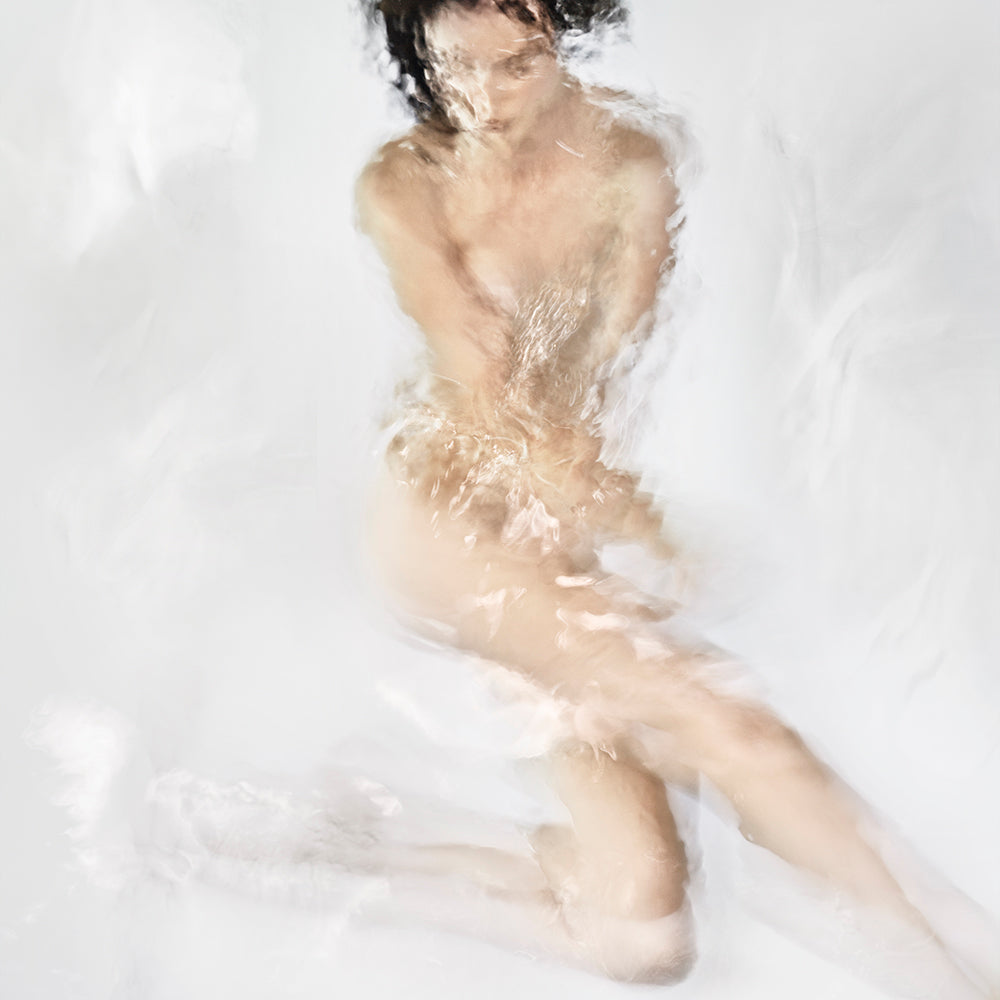
In anticipation of her most recent series, Figure Painting, we sat down with Toronto artist Barbara Cole to learn about her process, methods and inspiration behind her most minimal work to date.  

Barbara Cole, Figure Painting, presented by Bau-Xi Gallery

1) “Figure Painting” is a remarkable title for a series of photographs. What inspired this title?

I have been known to have five, six or even more "working titles" to my shows. This has the effect of driving people crazy – especially my studio assistants. It’s very unusual for me to find a title at the outset that sticks but this one did. Figure Painting embodies the correlation between drawing with the camera in water and messing around with finger paints as a child. It was a fun play on words that sums up my approach to photography.


2) What was the most challenging aspect of creating this particular series?

Working with these talented performers is always quite challenging. Not only do they need to work under the water in a graceful way, but they need to learn how to breath for balance, keep their eyes relaxed and open, straighten their wardrobe and hair, and brush any stray bubbles off their faces and bodies. With Figure Painting they were stripped down, quite literately. Their body was their wardrobe so on top of everything they had to find poses that would cover certain parts of their anatomy.  

Technically there are always challenges because every idea requires a new approach. I think you just have to believe that anything is possible and then get your crew on side to see your vision and help with its execution.

3) This series has an unusual back story - it turned out quite differently than you had originally conceived. Can you tell us about the original concept, and how it transitioned?

It was amazing how this show came about. I had worked up big plans for another body of work called WHIRL, based loosely on the idea of a Whirling Dirvish. As is often the case, things underwater work differently. Within moments of the first day of shooting I knew I would have to think of something else. As I looked around my pool-side studio at my crew, and feeling no small amount of pressure, I pulled the Figure Painting concept out of my back pocket…which is to say virtually out of thin air. I didn’t know I had a backup idea until that moment, but I suppose all of us artists do.

4) There is a historical tradition of painters referencing photography, and vice-versa. Are there any artists whose transcendence of the boundary between the two mediums you find inspiring?

The moment I saw the work of French photographer Sarah Moon I recognized how powerful photography could be. Nobody else’s work has ever touched me the same way since. The evocative nature of her imagery still takes my breath away but back then I was totally spellbound. Since the first Sarah Moon photograph I ever glimpsed  I understood how the camera could be used for nuance and gesture.

For the past six years I’ve been reading about the talents of past image makers and I especially love the mood and atmosphere of the Pictorialist photographer, Heinrich Kuhn circa 1900’s. He has created without a doubt some of the most beautiful photographs I have ever seen. Kuhn had complete control of the photographic medium.


5) Could you describe how your passion for swimming informs your practice as an artist?

Strangely, I have always solved creative problems while swimming. If this happens early in the swim I cross my fingers for the rest of the swim so that I don’t forget. It is awkward to swim with crossed fingers! The water has been my office since the 70’s and I swim as many days a week as I can. I look forward to what will happen. Sometimes I figure something out that I didn’t even realize needed looking at. Other times my mind wanders and I find I’ve set up the next shoot. All the time I feel energized to tackle life.


 6) What advice would you offer to emerging artists?

I would encourage an emerging artist to find their own voice. I believe that is the best way to succeed. There are so many people out there all doing the same thing with various levels of expertise. One creates art for oneself. It’s something that comes from inside you and not the other way around. Manage your expectations so you don’t get discouraged and give up. You are building a practice and that takes time.


Learn more about Barbara Cole's incredible new series here: 


Bau-Xi Gallery will be showing a special preview of Figure Painting at the Toronto International Art Fair on Thursday, October 26. Visit us in booth A18 for an exclusive look. 

The full series will be on display at Bau-Xi Photo, (350 Dundas St. West, Toronto), starting Saturday, November 4. There will be an opening reception from 2-4pm, and the artist will be in attendance.


Read more

ARTIST Q & A: CORI CREED ON SHIFT

1) What meaning does the title of the exhibition Shift hold for you?

I think about the purpose of painting. Is it to record a place? A moment? A feeling? Or is it to communicate ideas and tell stories with marks and strokes and colour? If the painting is at all representational, there is a subject, a scene, an illusion. And there is always process. I like to disrupt the illusion with reminders of the process. And so, this exhibition focuses on the shift, as my current practice oscillates between the story and the storytelling.

2) There is a real sense of movement and an exploratory quality of mark-making in this body of work. Are there new concepts, techniques, or new sites/locations that have inspired you?

I am endlessly questing for inspiration and so many different things find their way into my work. It could be the negative space in another artist’s work, a stage set at a theatre or the medium. I am always searching new ways to mix and apply it.

3) It’s interesting to think that not so long ago, you were so strongly linked with the arbutus tree as your dominant subject matter, yet not a single one appears in this show. Is this a conscious decision?

Not really. I am a bit blown by winds of obsession! Currently, I’m captivated by the abstraction that oceanscapes offer, the graphic nature of birch trees, or light patterning afforded by forest.


4) Do you approach the oceanscapes differently from the landscapes?

Oceanscapes are so much about movement, and there is freedom found in painting a scene with no fixed element. Even the horizon becomes blurred with light and weather. The focus can be placed heavily on the language of the paint.


5) This is the first time we have seen the introduction of the smaller 10 x 10 inch oil studies. Could you tell us a little about them?

Sometimes I do sketches to plan a painting. Sometimes I feel that planning hampers the unconscious influences that I feel can be crucial. For this body of work, as I try to move toward the essential elements of a scene or time, I found it helpful to create small pieces. The studies helped me to maintain a sense of space when to a larger canvas.

6) What are your plans in the studio after this show ?

I experimented with a couple pieces in this show by shooting references at night. The references were illuminated by an artificial light source and being able to control my lighting helped to set the stage. I would like to look into this further.


Photography courtesy of Sarah Jane Photography


VIEW COLLECTION ONLINE


Read more

Inside The Home & Studio of Cori Creed

A look inside the stunning West Vancouver home and studio of artist Cori Creed. 

Photographs courtesy of Sarah Jane Photography

VIEW NEW WORK BY CORI CREED

Read more

International Photography Awards: Barbara Cole awarded two Honorable Mentions


Forget-Me-Not Lenticular by Barbara Cole, presented by Bau-Xi Gallery Falling Through Time by Barbara Cole, presented by Bau-Xi Gallery

Canadian photographer Barbara Cole was awarded two Honorable Mentions at this year's International Photography Awards.  The first was Honorable Mention in Moving Images for the winning entry 'Forget-Me-Not Lenticular, from Falling Through Time' (above, left) and the second was Honorable Mention in Fine Art - Other for the winning entry 'Falling Through Time' (above, right).

Barbara Cole was awarded third prize at the International Photography Awards in 2009, and has received several Honorable Mentions in past years.  

Click here to read more about the International Photography Awards. 

CLICK HERE TO VIEW MORE WORK BY BARBARA COLE.

Read more

Book Announcement: LANY by Jeffrey Milstein

LANY book by Jeffrey Milstein, Bau-Xi Gallery

We are thrilled to announce the November 2017 publication of Jeffrey Milstein's new book, LANY: Aerial Photographs of Los Angeles and New York (Thames & Hudson, November 7, 2017).  LA NY is a dazzling visual tale of two cities, Los Angeles and New York, photographed from the air.  The artist shoots straight down to emphasize the particular patterns of place and the reciprocal relationships between the the urban grid and local topography.  These two distinguished cities are revealed in astonishing detail, as photographer Jeffrey Milstein explores iconic buildings and landmarks and compelling geometries of urban landscapes. 

Visit us in booth A18 at Art Toronto 2017 to see photographs from this incredible series.

Click here to read a review of Milstein's new book in Musée Magazine

CLICK HERE TO SEE MORE WORK BY JEFFREY MILSTEIN 

Read more

See Barbara Cole's latest series at Art Toronto 2017

Barbara Cole, All Prima, from Figure Painting, presented by Bau-Xi Gallery

Photographer Barbara Cole’s latest series Figure Painting extends, with renewed subtlety, the artist’s long affair with her preferred mediums: water, light and the figure. Like a painter, Cole mixes and layers, blends and builds her compositions into ethereal portraits rich with rhythm and dimension. Inspired by the painting techniques cited in their names, these figures—Alla PrimaUnderpainting, and others—are like beautiful ghosts: barely outlined by the dance of light across skin; so near the surface and somehow just out of reach. Cole’s camera lens—a tool which for the artist does not “capture” her created worlds but rather brings them into existence—plucks her ethereal subjects as though from a dream, granting them each a moment of stillness and mystery.

Figure Painting will be on preview at Art Toronto at the Metro Toronto Convention Centre, October 27-30, 2017

The series will be officially released for Cole's upcoming solo exhibition, which opens November 4th, 2017.  There will be an artist reception from 2-4pm at 350 Dundas St. West. 

VIEW MORE ARTWORK BY BARBARA COLE HERE

Read more

Michelle Nguyen's Uninhibited Art in GalleriesWest Magazine


Vancouver painter Michelle Nguyen was recently interviewed by Portia Priegert of GalleriesWest for her exhibition "Of Tristia, Forlorn!" at Bau-Xi Vancouver. In the article, Michelle cites the wide-ranging influences on her painting practice: from poetry and digital culture to the writing of 20th century art critic John Berger, and even her personal background as a child of Vietnamese refugees.

"One of her favourite paintings is Apparitions in a Crowd. “I’ve always been interested in the macabre, and as a kid, had an active imagination and always worried about monsters and things. I don't know. I guess in some way they are kind of weird Freudian reflections of my unconscious, or something. I don’t think about it too much, to be honest. People are always asking me these questions and I don’t necessarily know how to answer. There’s a reason you choose painting instead of writing – because I don’t know how to express that in an articulate way in the English language.” - Portia Priegert on Michelle Nguyen

"Of Tristia, Forlorn!" is on view at Bau-Xi Vancouver until September 23. See the full Michelle Nguyen collection here.

Read the article on GalleriesWest

Read more

Joseph Plaskett Solo Exhibition: New Paintings Released

 Joseph Plaskett, Vatheima, Apples & Window, 2006, Oil on Canvas, 39.75 X 24.25 in.


Bau-Xi Gallery Vancouver and Toronto are honoured to have the opportunity to share never-before exhibited paintings by Joseph Plaskett in concurrent exhibitions running September 30th through October 11th, 2017.

Plaskett is considered one of Canada’s most talented and established artists, and has exhibited with Bau-Xi Gallery since 1973. He was born in 1918 in New Westminster, BC, and studied fine art in Banff, San Francisco, New York, London, and Paris, where he lived for many years. Since the 1940s, Plaskett's work has been featured in over 65 solo and group exhibitions, with paintings in major private, corporate, and  esteemed public collections including the National Gallery of Canada, the Art Gallery of Ontario, and the Vancouver Art Gallery. In 2001, he was awarded The Order of Canada for Excellence in the Field of Visual Art.

Those who knew Plaskett (“Joe” to old and new friends) were enchanted by his charm, and by his delight in the process of discovery each painting offered him.  He painted intimate scenes of everyday life, evident in this collection of work: flowers bought from the market, fruit and gourds neatly arranged or toppling across tables, the interior of a simple kitchen cabinet, or the view outside his Suffolk home window. Each canvas expresses a warm humanity, and reveals the artist’s mastery of light, form, and colour.

A desire to learn and experiment contributed to Plaskett’s longevity as a painter, as it urged him to constantly develop his practice. Speaking about the last show he was able to attend at Bau-Xi, Plaskett reflected on his life and work: “I constantly make new discoveries. This describes the excitement and joy in which I work…My aim is Beauty, or Joy. Enlightenment comes without too much conscious thought. It comes as a surprise. I marvel at having done something that has never been done before.”

Plaskett passed away on September 21 in his home in England at the age of 96, and is remembered as an influential artist in Canadian history. We look forward to sharing this special collection of works newly released from the estate with admirers and collectors.

Please join us for the Opening Reception on Saturday September 30th, 2-4PM, in both Toronto and Vancouver.


SELECTIONS AVAILABLE TO VIEW & ACQUIRE IN VANCOUVER & TORONTO:


AVAILABLE IN TORONTO:

Chinese Lanterns-Night, 2006, Oil on Canvas, 31.5 X 38.25 in. $20,500


Chinese Vase & Fruit, n/d, Oil on Canvas, 23.5 X 17.5 in. $9,500


Pumpkin, Marrow & Bananas, 2007, Oil on Linen, 23.75 X 18 in. $9,550


Pumpkin & Marrow (2), 2007, Oil on Canvas, 16.5 X 21.75 in. $8,750


Green & Purple Cabbage, 2009, Oil on Canvas, 29 X 25.25 in. $14,400
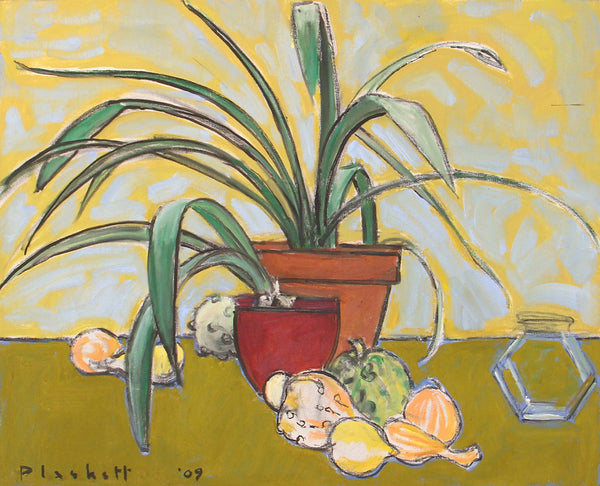


Clivia 2, Gourds, 2009, Oil on Canvas, 25.5 X 31.25 in. $15,500
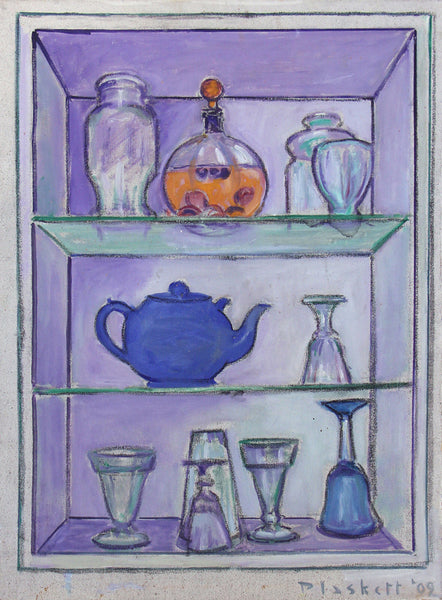


The Shelves (2), 2009, Oil on Canvas, 28.5 X 21 in. $15,500


AVAILABLE IN VANCOUVER:

Untitled Landscape, 1990, Oil on Canvas, 26 X 47.5 in. $20,550


Cabbage and Onions (3), 2010, Oil on Canvas, 29.5 X 25.5 in. $14,675


Untitled Still Life, 2007, Oil on Linen, 36 X 36 in. $21,500


Vertical Table with Apples (1), 2009, Oil on Canvas, 33.5 X 16 in. $11,300


  Two Amaryllis, 2014, Oil on Canvas, 31 X 31.5 in. $17,750


Pots on Octagonal Table (4), 2007, Oil on Canvas, 28.5 X 39 in. $19,900

Read more

Artist Q & A: Sheri Bakes


1) Is painting a deeply personal process for you? What does painting mean to you?

I think painting for me is a way to process things deeply. To connect to and align with the miracle.  Frederick Franck describes this best in speaking about drawing: 

"It is in order to really see, to see ever deeper, ever more intensely, hence to be fully aware and alive, that I draw what the Chinese call 'The Ten Thousand Things' around me. Drawing is the discipline by which I constantly rediscover the world. I have learned that what I have not drawn, I have never really seen, and that when I start drawing an ordinary thing, I realize how extraordinary it is, sheer miracle”. – Frederick Franck

2) You’ve mentioned before that you often work from photographs because it helps ground and stabilize your compositions. From this place you described how you can create movement from “a more intuitive place”. Could you describe in more detail what it is that you attempt to capture?

Capture is an interesting word. At the base of all of my work, from the beginning, is wind: Ruwach - Spirit, breath, wind - which are impossible to capture. I think that's the challenge: how to really express this quality in a painting. Being impossible to capture without ending its life, the trick is to somehow become it and express what that feels like. Seemingly impossible, but fun to try. 


3) We’re excited to hear that Darlene Cole’s work served as an inspiration for these new paintings. What other artists have informed your recent body of work?

Honestly, Darlene is completely blowing my mind with her work. She's the only one I really follow on Instagram and she's it as far as I'm concerned. She paints with such a great mix of confident vulnerability and in such a masterful loose and free way. Her style is so foreign to me and I'm completely in awe of her skills, intuition and heart. 

4) Could you describe your own relationship to gardening, or more broadly, to nature and how it informs your art practice?

When I was a child I spent hours every day in my parents’ gardens. Especially the food garden. When I was young our garden was huge. Peach, pear, plum and cherry trees, raspberries, rhubarb, strawberries and a lot of vegetables. I haven't had my own garden for many years and am looking forward to having one again next year. As far as nature goes, I feel best when I'm outside. I always have. As a kid I slept outside as much as I possibly could. This show was all made while painting outside. I feel disconnected when I'm not outside. When I can't experience shifts in light through the day, changes in barometric pressure, birds singing ...

My work needs to stem from a place of alignment (as opposed to competing or being out of tune) with nature so it informs the work a lot. Nature is the tuning fork. It keeps everything in tune. 


 Sheri Bakes, Feeding Bees, Oil on Canvas, 40 x 40 in.


5) Could you speak more about your plein air painting practice? Do you have specific rituals or routines that help ground you?


My dogs actually ground me the most. On breaks from painting we go for walks, hikes or do some training. Their non-verbal companionship grounds me.

In the studio I sometimes listen to the CBC and sometimes music but often it’s just silent. I do find silence grounding, as are the natural sounds of birds, frogs or crickets. While painting for this show, I was surrounded by mourning doves every morning. I found their sounds very soothing and sympathetic to the process of painting.

6) How important is spontaneity in your art?

I’m drawn to the freedom of spontaneity after conceptualizing an idea. It’s a process of letting go and learning as you go. In my first poetry class in university, the instructor introduced us to Theodore Roethke's poem, 'The Waking'. This poem, and his reading of it, completely transformed my mind with respect to process and taught me to "learn by going where I have to go."

7) You seem to have a great interest in the physical world’s process of transformation and renewal - how would you say you respond to the cyclical nature of seasons through your work?

I appreciate the structure that natural cycles provide, kind of like growth rings in a tree. In the larger picture, natural cycles are stabilizing and grounding.

8) How has your work developed in the past few years and how do you see it evolving in the future?

The work has become increasingly abstract and the movement is now often contained within the piece instead of veering out of the top right of the canvas. I seem to be making less small work now and using photos less and less.

I'm interested in the physicality of the paint, and also in saying more with less and moving into a painting practice that is very minimal. I'd like my paintings to become better listeners. I really need the vastness of space and silence. It seems a bit like the world could use more of that, too.


 Sheri Bakes, Rain Oil on Canvas, 52 x 52 in.

Wind Songs opens at Bau-Xi Vancouver on September 9
VIEW MORE ARTWORK FROM SHERI BAKES

Read more

ARTIST Q & A : MICHELLE NGUYEN

1) Poetry is a major influence for you, how did it inspire the title ‘Of Tristia, Forlorn!’ and in what ways do the two mediums intersect in your practice?

One of my favourite poems, Rodney Koeneke’s “Tristia” is my inspiration for the title. When asked about its influence, I give the example of the line, “one minute you burn, the next/you’re gelatinous as cold spaghetti.” Koeneke has the ability to seamlessly flit between these two vernaculars, one of extreme intensity and passion, and one of light jovial nonsense. This contrast is the perfect precedent for how I want people to receive my work.

Poetry is something that I learned to love before I started painting, and in those regards, I will say that my love for poetry is greater. Furthermore, I believe the two forms of expression to be quite similar in that they are both obscured forms communicative mark making.

 Michelle Nguyen, Brides, Oil & Pastel on Canvas, 48 x 59 in.


2) How does your identity and personal history inform your work?

Both of my parents are Vietnamese refugees, and as a second generation Canadian, there is this unsettling feeling of inhabiting an ecotone, torn between the clashing of two sets of values and morals. There is this transgenerational transmission of trauma that I don’t quite understand, and this otherness that exists in both the cultures I occupy. I have accepted that I will never fully be able to articulate and understand the weight of these things. Sometimes, my paintings feel like strange Freudian dreams that capture those conflicts of identity.


3) The majority of your paintings are figurative, what sources are your figures drawn from and are there specific narratives, cultures or figures real or fictional, historical or contemporary that guide your work?

I have a great deal of reference photos stocked up on my phone that I am constantly referring to when I compose a painting. It’s like one big Pinterest board. I pull inspiration from a lot of different worlds of lore and theory. At this moment in time, I am really driven by spatial theory as well as Grecian mythology and the Victorian aesthetic. Honestly, it really depends on what I have been reading that week.


4) You’ve mentioned that you’re greatly influenced by artists like Cy Twombly, Cecily Brown, Egon Schiele and Andy Dixon, could you explain the specific ways in which your practice has shifted as a result of your exposure to their work? 

They have all had a hand in defining the way I paint. I can recall each painting I made after learning about their work. Cecily Brown and Egon Schiele have kept figurative painting exciting for me (a subject I previously had venomously opposed). Andy Dixon has done the same but has also introduced me to the use of oil pastel. Cy Twombly, who is ultimately my favourite painter of all time, has shaped my practice the most. There is just so much confidence and vigour present in his mark marking. You can practically feel the vitality from his brushstrokes. His dynamism is something I am constantly trying to emulate.  

Michelle Nguyen, Jelly Jamboree, Oil & Pastel on Canvas, 48.25 x 59 in.


5) Can you explain a little about your process? Do you paint with a sketch or with a composition in mind or is it more spontaneous? How do your canvases evolve into its final form?

I don’t usually do any sketches to prepare. I’ve taken this approach a few times, and it seems more limiting to me than productive. I have a handful of loose and disjointed ideas going in and I feel like I can only figure it out on the canvas itself. It’s like putting together a jigsaw puzzle or a collage. Additionally, I try to treat my canvas as a palimpsest. If something doesn’t work out mid-way I just paint over it with an understanding that no brushstroke is squandered and that they just add to the intricacies of the painting.


6) What does the body represent in your work and in what ways does the figure or the crowd interact with the viewer?

I am largely interested in aesthetic theory and was mostly painting abstracts up until I read Ways of Seeing by John Berger. I specifically was interested in his essay on the naked versus the nude, and the distribution of power amongst the audience and the subject. I thought it would be fun to attempt to invert this dynamic, so I began to experiment with these images of overwhelming mass crowds and alien bodies.


7) Humour plays a significant role in your work, why is it important to you to inject an element of the absurd and comedic into your paintings?

The elements of play and bricolage are very important to my process, and I want that lightheartedness to come through in my paintings.


Michelle Nguyen, Carnivory, Oil & Pastel on Canvas, 56.25 x 41 in., 2017


8) You work primarily in oil paint and oil pastel, which qualities in these mediums draws you to them?

I consider oil to be way more forgiving than most painting mediums. I love the texture of oil paints and its ability to capture the subtle gestures of ones brush. As for oil pastels, I think they just aid in emphasizing my existing illustrative style.
Read more
480 results
Continue browsing
Your Order

You have no items in your selection.