Joseph Plaskett | A Speaking Likeness, 1999 (300 pages)
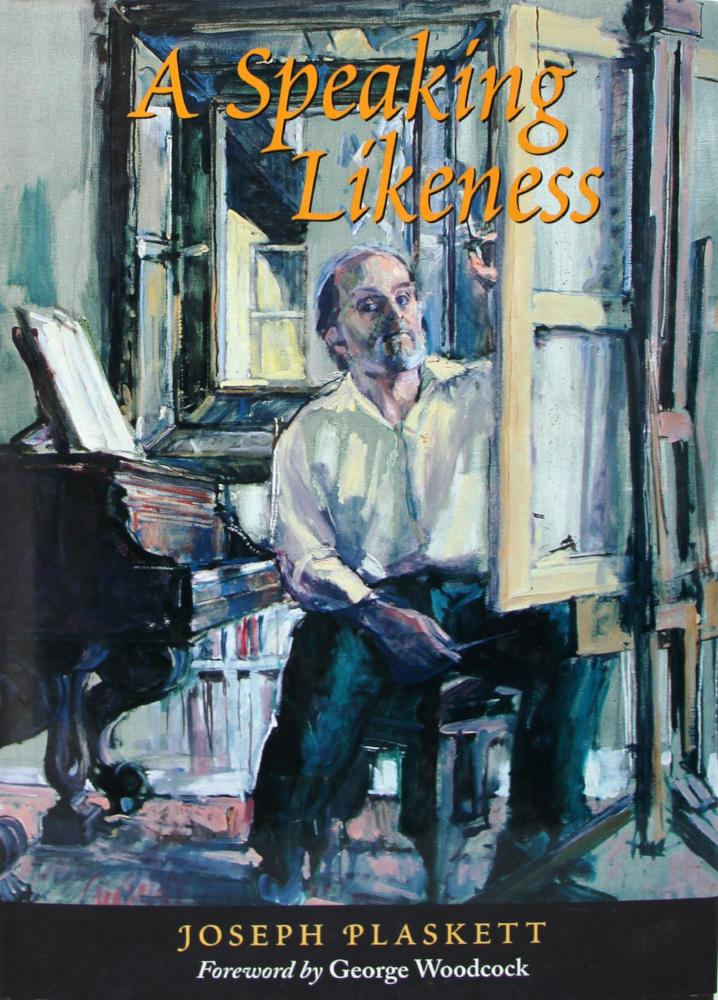
In this lavishly produced volume, Joseph Plaskett has created a prose "life in art" as colourful and vital as his finest paintings. He begins with his early life in New Westminster, BC, at a time when there were no private galleries.
Lawren Harris and Jock Macdonald were among his early mentors, and they helped him to win the first Emily Carr scholarship, which enabled him to pursue his studies at the San Francisco School of Fine Art and then in New York under Hans Hofmann. After New York, he succeeded Lemoine Fitzgerald as Principal of the Winnipeg School of Art and later taught art at the Banff School of Fine Art.
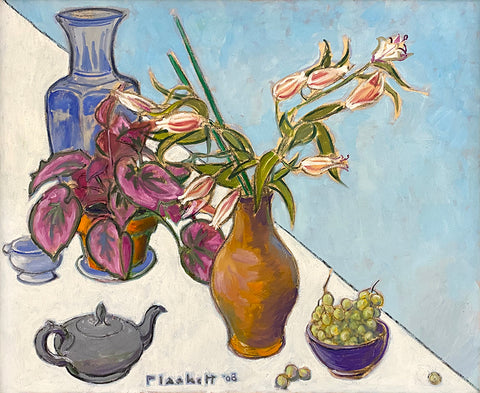
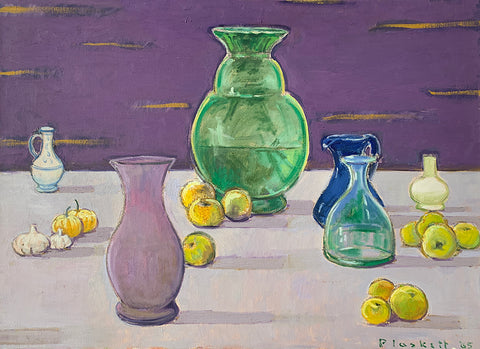
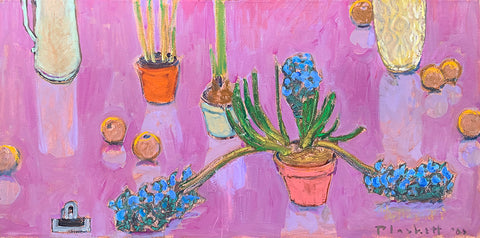
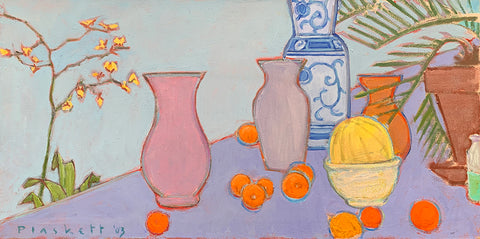
Throughout A Speaking Likeness Plaskett explores in detail his own journey into Abstractionism and then onwards to new figurative styles that have embraced the sensuous and tactile. He discusses many of his more well known paintings, commenting especially on his use of mirrors and shadows. Colour has always been especially important to Plaskett, and here he examines the creation of his palette and the ways in which "meaning" can be conveyed in colour.
Plaskett's home at 2 rue Pecquay in Paris has been for many years a central meeting place for Canadian painters and writers travelling on the Continent. His memoirs are packed with stories about the famous people he came to know, such as Jack Yeats, Bill Reid, Jean Paul Lemieux and Mavis Gallant. George Woodcock has kindly contributed an introduction to the volume, one of the last pieces that he wrote. Also included are some 24 full-colour, full-page reproductions of Plaskett's finest paintings as well as some 80 of his own black and white photos.
-----
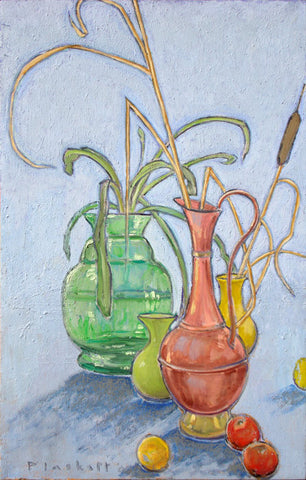
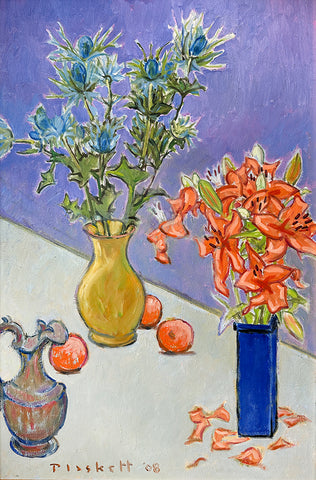
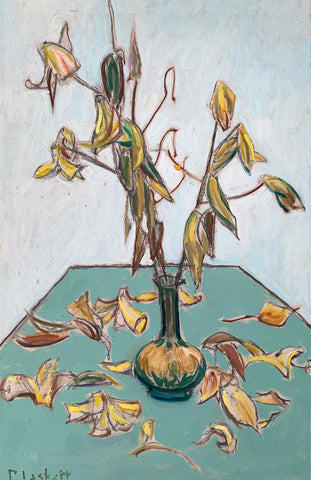
Joseph Plaskett’s paintings are celebrated for their luminous colour, thoughtful composition, and intimate portrayals of everyday life. Working primarily in oil and pastel, Plaskett’s timeless works encompass still lifes, interiors, portraits, and garden scenes that reveal a profound sensitivity to light, form, and colour.
Born in New Westminster, British Columbia, in 1918, Plaskett pursued an artistic education, studying at the Banff School of Fine Arts, the San Francisco School of Art, with Hans Hofmann in New York, at the Slade School in London, and alongside Fernand Léger in Paris. These formative experiences shaped the beauty that define his work.
Plaskett’s chosen subjects are rooted in the familiar and the personal – fruit arranged on tabletop surfaces, flowers in vases, sunlit rooms, and portraits of friends and models – yet each painting resonates with a quiet depth that transcends representation. His compositions are composed with a warm humanity, reflecting a lifelong fascination with how paint can evoke emotion, memory, and sensation.
Over a career spanning more than six decades, Plaskett exhibited widely, with over 65 solo and group exhibitions and work held by major collections, including the National Gallery of Canada. In recognition of his excellence in the visual arts, he was appointed Officer of the Order of Canada in 2001; a testament to his influence on Canadian painting.
Throughout his life, Plaskett maintained a long association with Bau-Xi Gallery, showing with the gallery in both Vancouver and Toronto since the early 1970s. His work continues to be admired for its radiant surfaces, richly saturated colour, and the thoughtful balance between observation and expression.
In addition to his artistic legacy, the Joseph Plaskett Foundation Award continues his commitment to painting by supporting emerging artists with travel and study opportunities in Europe, reflecting his belief in the importance of artistic growth and cultural exchange.