Janna Watson featured in Toronto Life
“Inside painter Janna Watson’s minimalist studio in a Grey County forest”
Toronto Life | April 30, 2026 | Words by Kathy Chow | Photography by Finn O'Hara
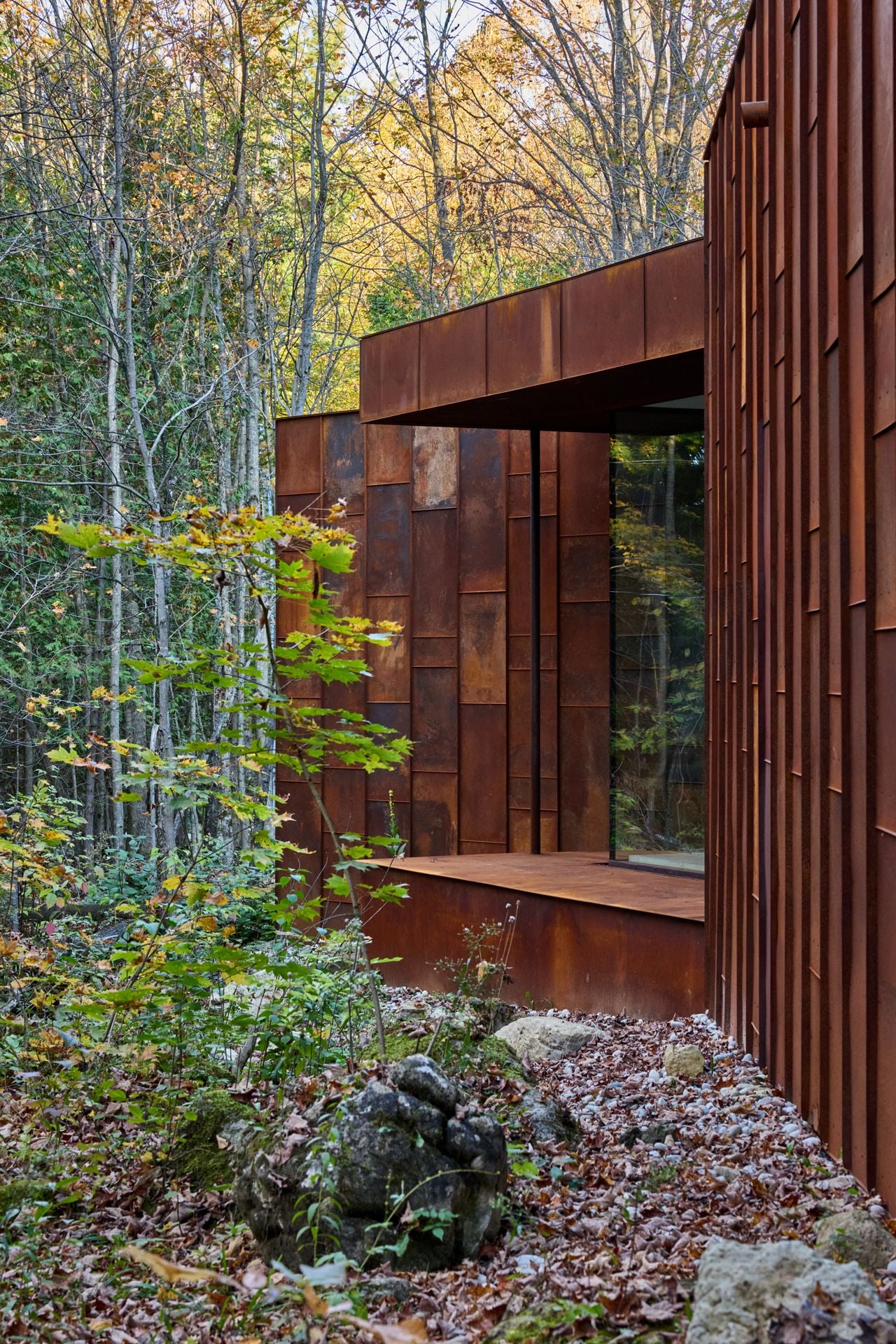
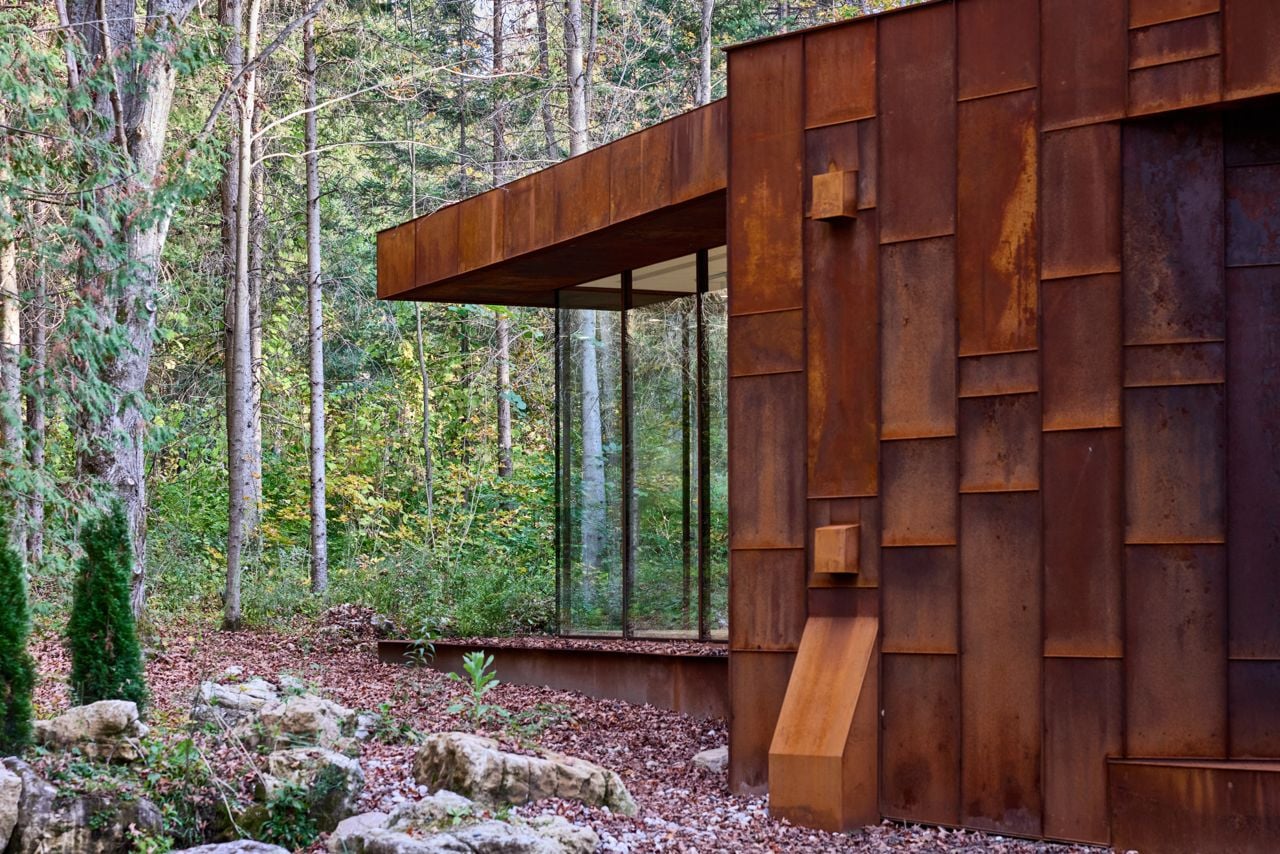
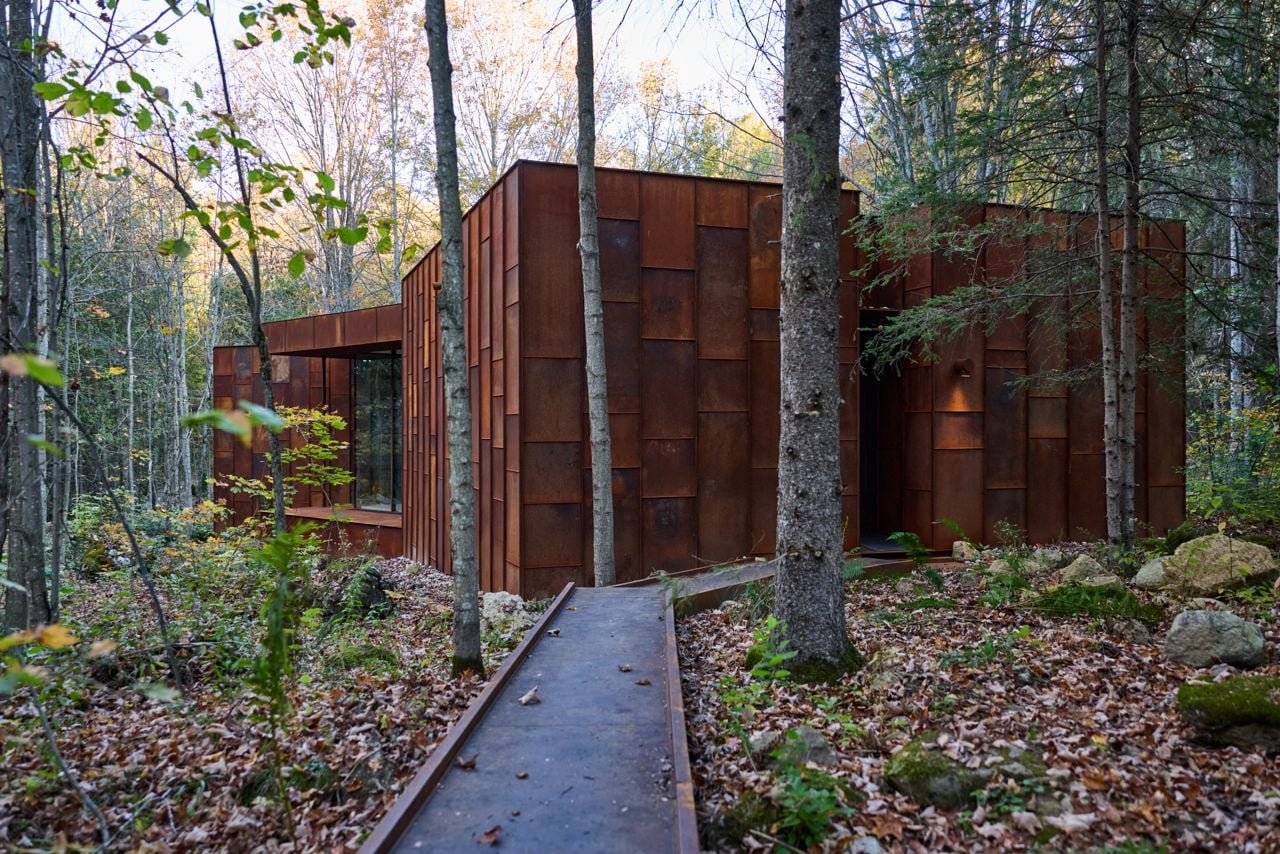
A weathered steel exterior renders the building virtually invisible from the road.
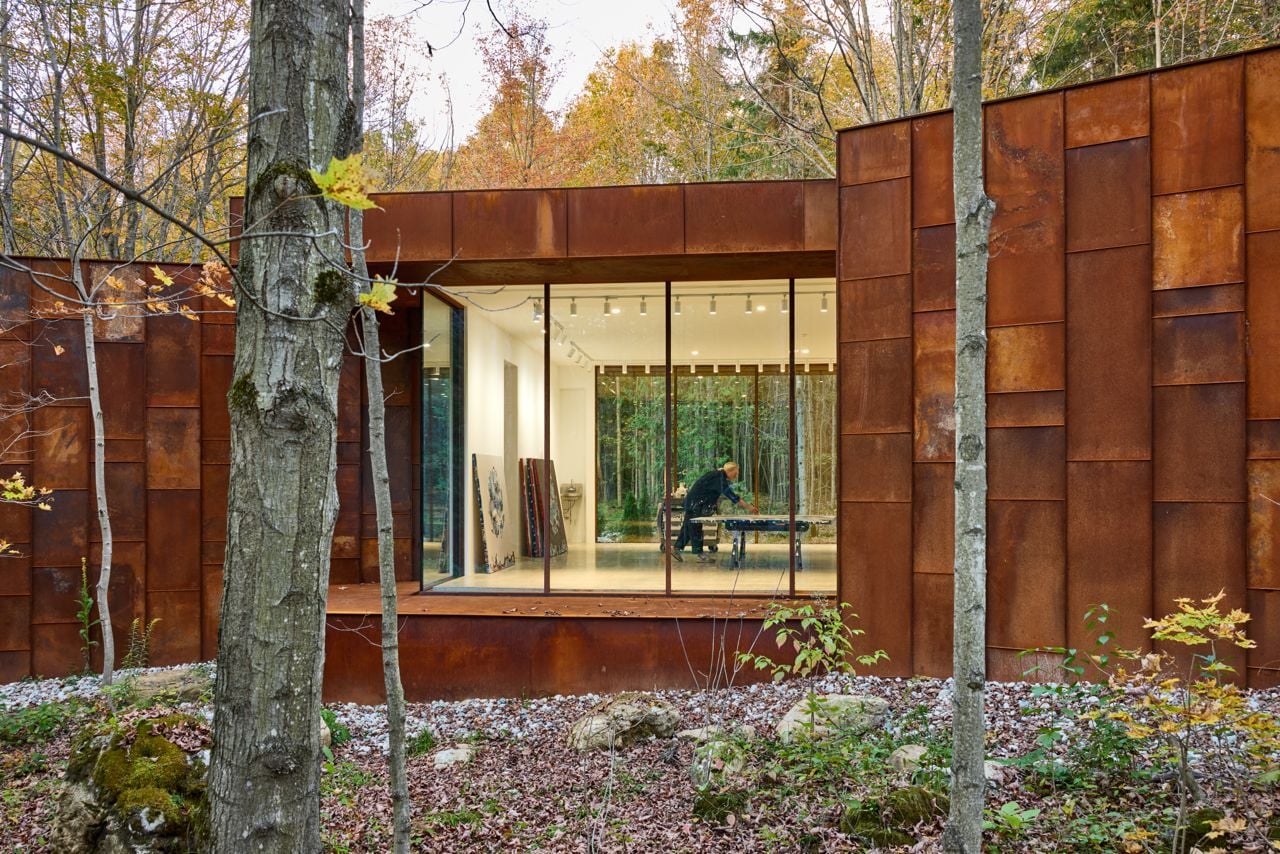
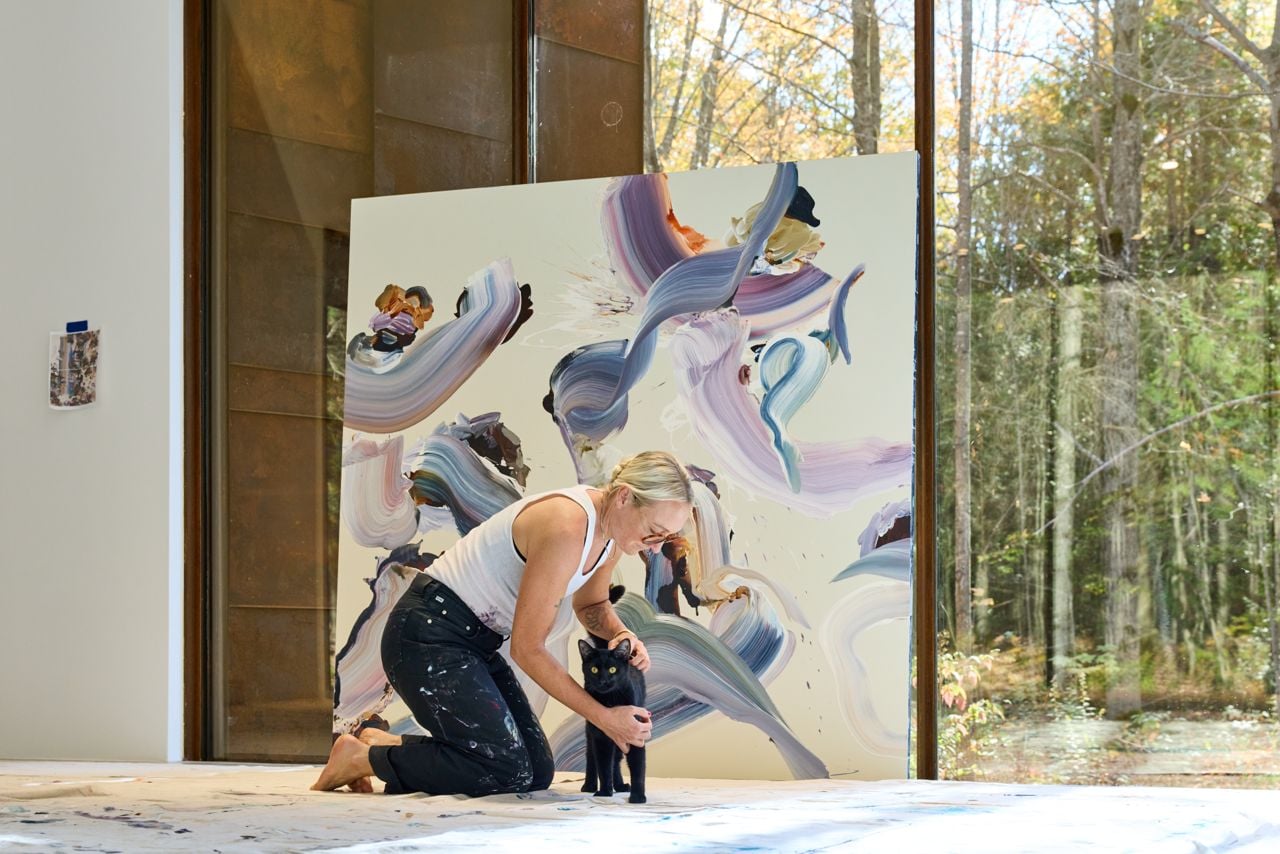
Conceptual artist Janna Watson daubs pastel swirls onto canvas to create dreamlike paintings that evoke an ethereal realm. While her works can transport viewers into a different world, Watson derives much of her inspiration from what she sees directly outside the window of her sparse, light-filled studio in the wilderness of Grey County.
Watson was raised in the tiny village of Flesherton, Ontario (population: 590), and moved to Toronto in 2003 to attend OCAD, where her grandmother had studied painting in the 1950s under the tutelage of the Group of Seven’s A. Y. Jackson. But, after 15 years living and working in the city, Watson began spending more time back in Flesherton and found that being surrounded by nature was good for her nervous system. She began seeking out excuses to see her parents and visit the forests where she grew up.
In 2021, after she won a major commission to create paintings for the Taipei Electromagnetic Brain Pulse Center, she put the money toward a two-bedroom A-frame surrounded by 14 acres of forest near her childhood home. Watson began to shuttle between her three-bedroom townhouse in Toronto and the Grey County home, where she repurposed the existing two-car garage into a makeshift painting studio.
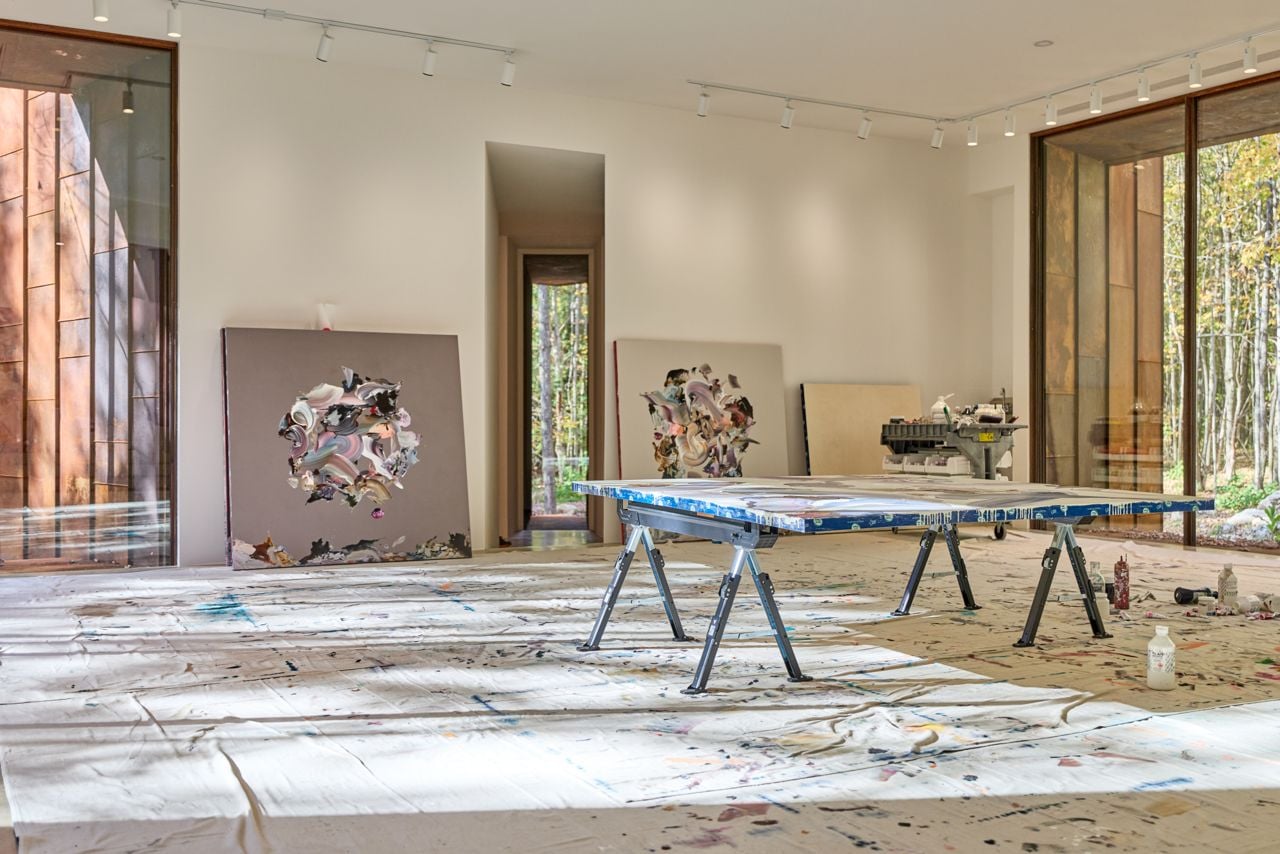
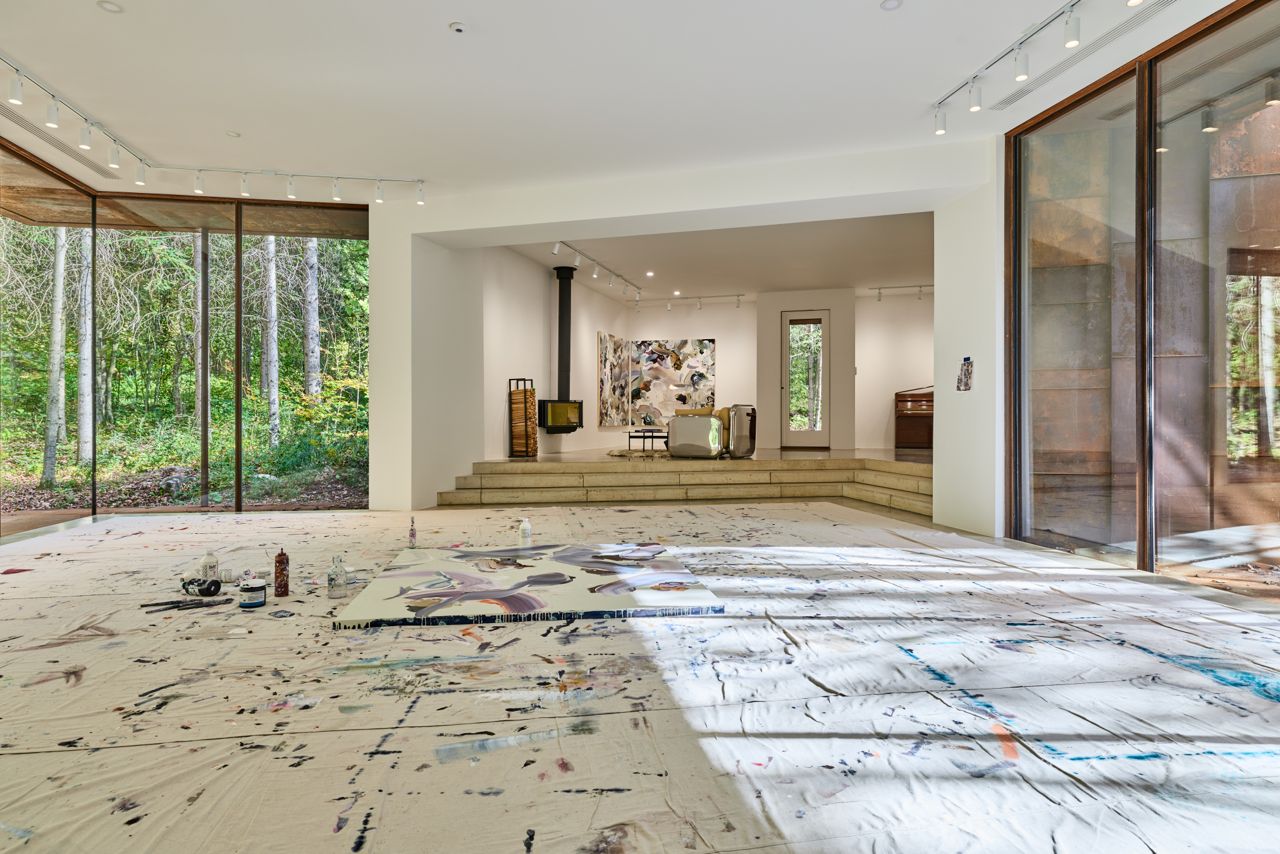
The 600-square-foot garage studio was functional but not ideal. It had no heat, and the humidity fluctuated constantly. Also, Watson prefers to work with multiple canvases side by side, and the garage had only enough floor space to work on one large painting at a time.
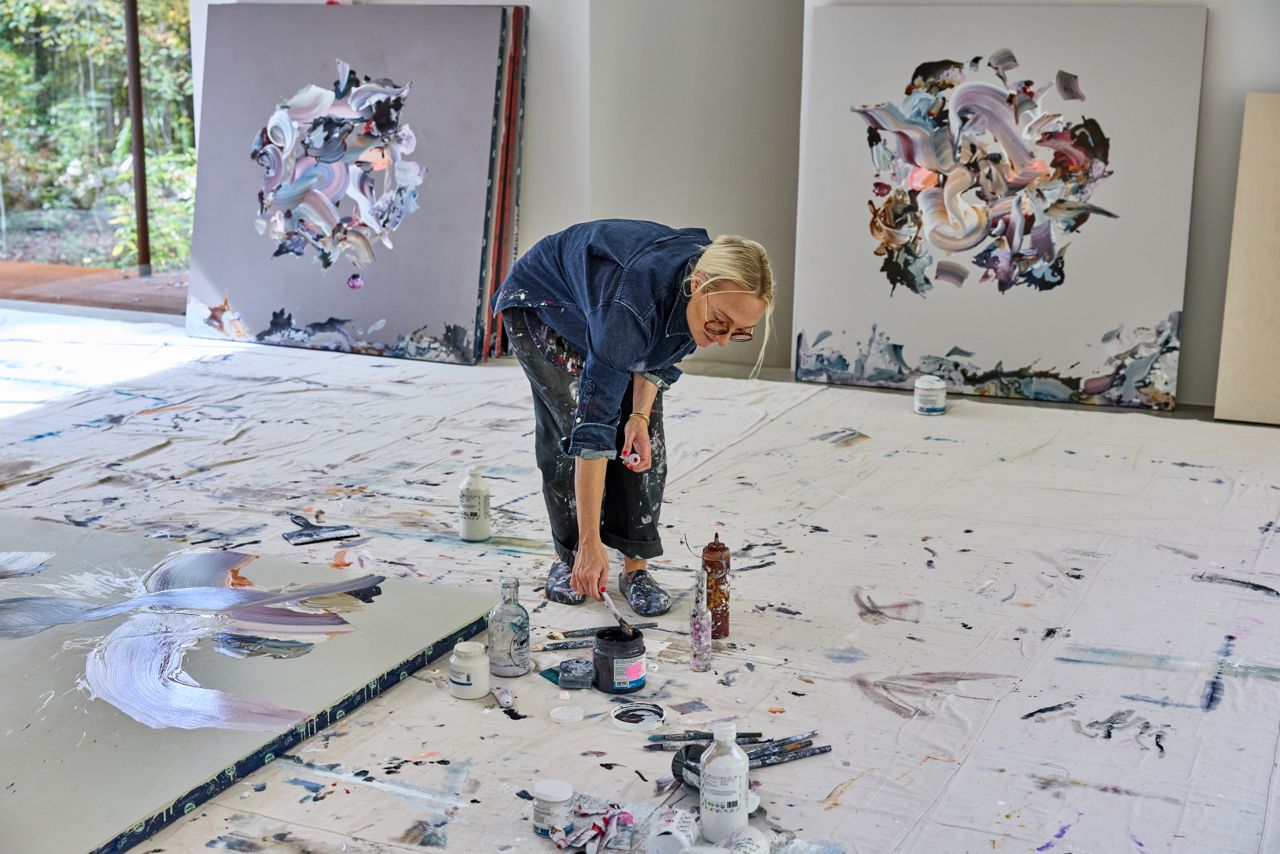
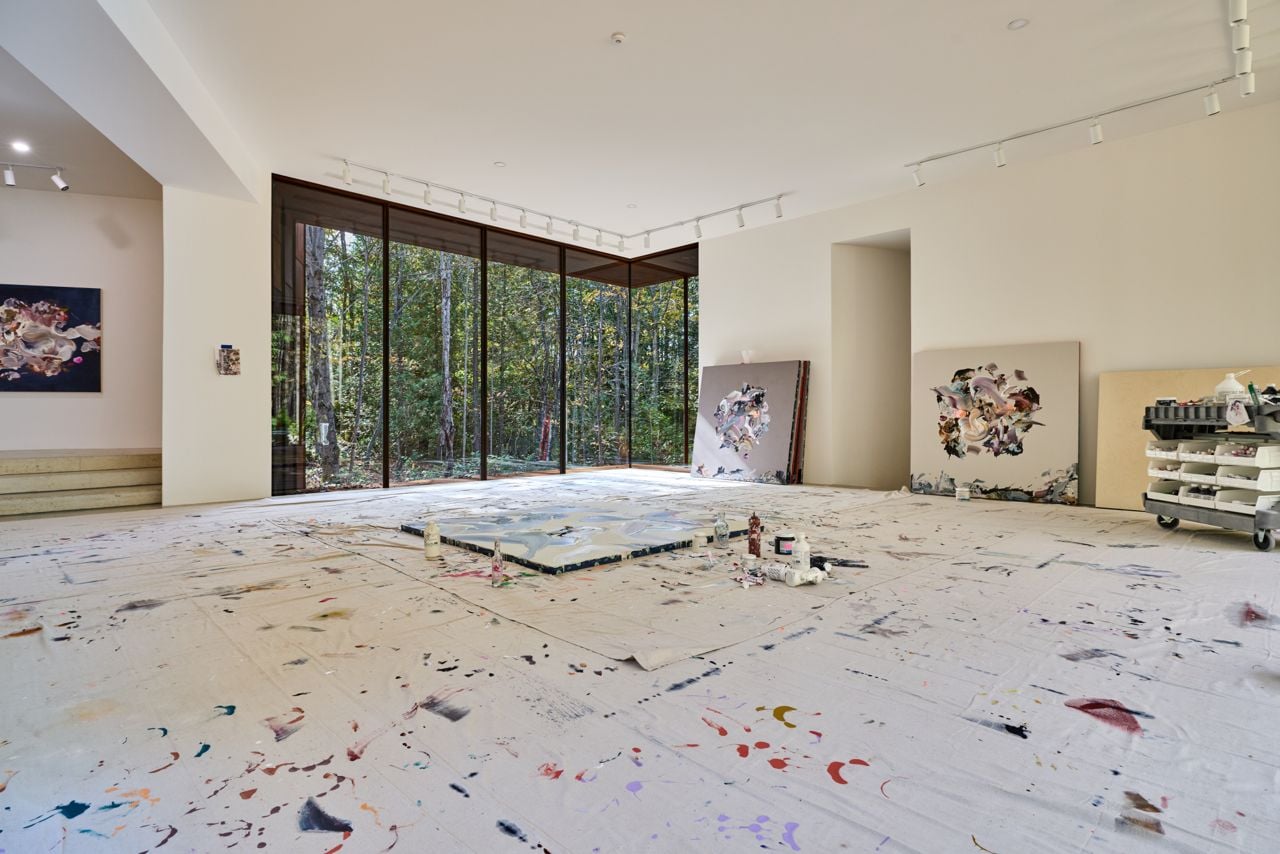
In 2022, Watson decided she was ready for something bigger and enlisted local architect Michael Curtis of Verge Select to design a studio that would allow her to feel fully immersed in the forest while she worked. Her directive: enough space to create freely, a place to photograph her work and relax, and a small kitchenette.
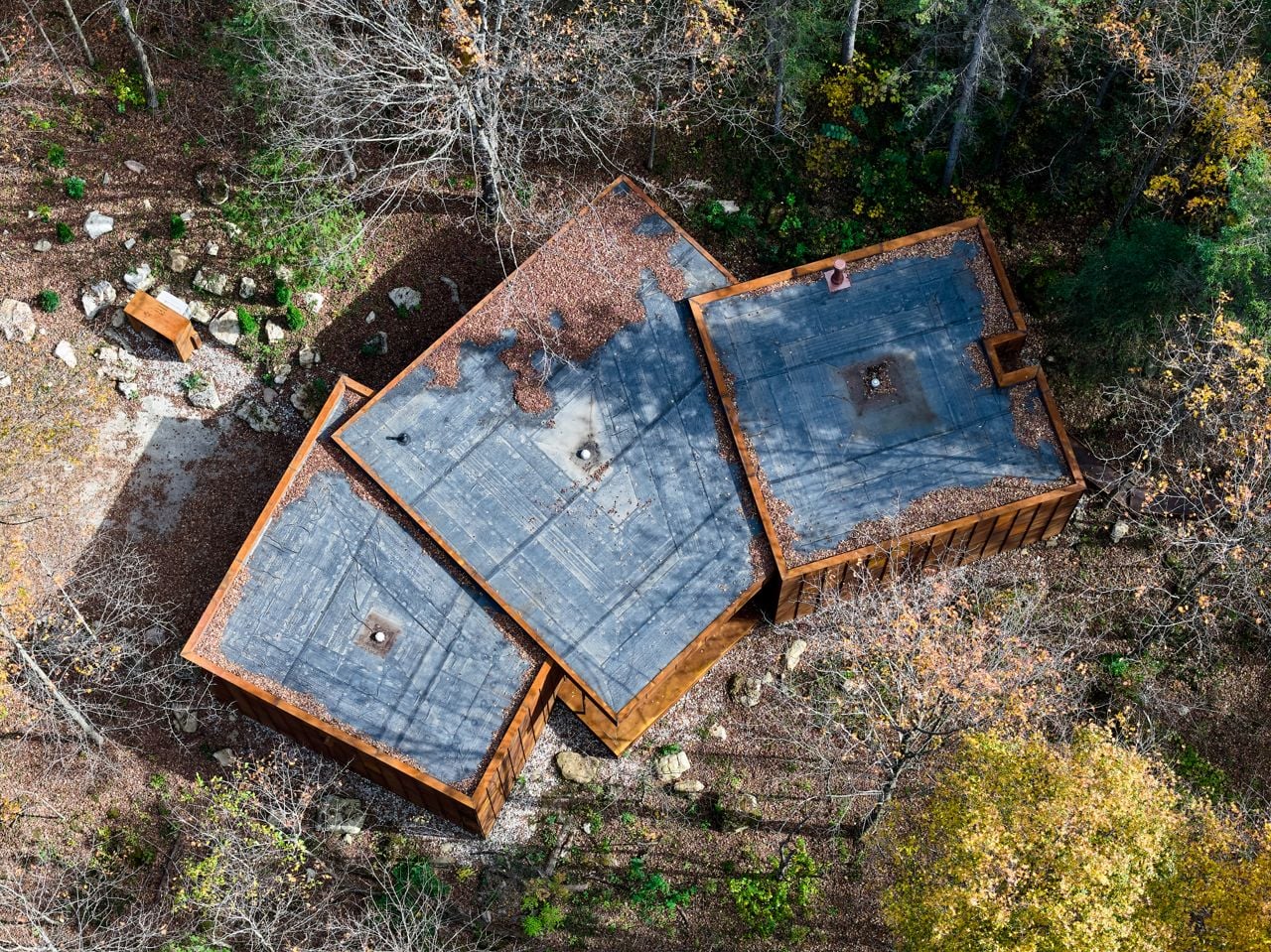
Watson admired the way Curtis’s buildings blended seamlessly into their environments and wanted the same for her studio. To achieve this, they settled on a corten steel exterior, which develops a stable layer of rust as it’s exposed to the elements. The resulting reddish-brown colouring blends in with the surrounding forest and renders the studio virtually invisible from the road.
From 2022 to 2024, Curtis and a team of eight contractors built the 1,700-square-foot studio on Watson’s property. In order to leave the landscape surrounding the studio untouched, the contractors brought in building materials on foot instead of cutting down trees to make space for a crane. During one November blizzard, when the ground was slick with ice and snow, workers used suction cups to carry giant panes of glass for the floor-to-ceiling windows across the rocky landscape.
When Watson first stepped into the studio, in January of 2025, the trees were covered in a dusting of snow. Standing in the middle of the space, she noticed that the back door window framed a tree in the shape of a cross. She was overwhelmed with a sense of being back in her childhood church, which her father—a Pentecostal preacher—had built by hand. “It was a full-circle moment,” she said. “I felt as though I had finally built my own sanctuary.”
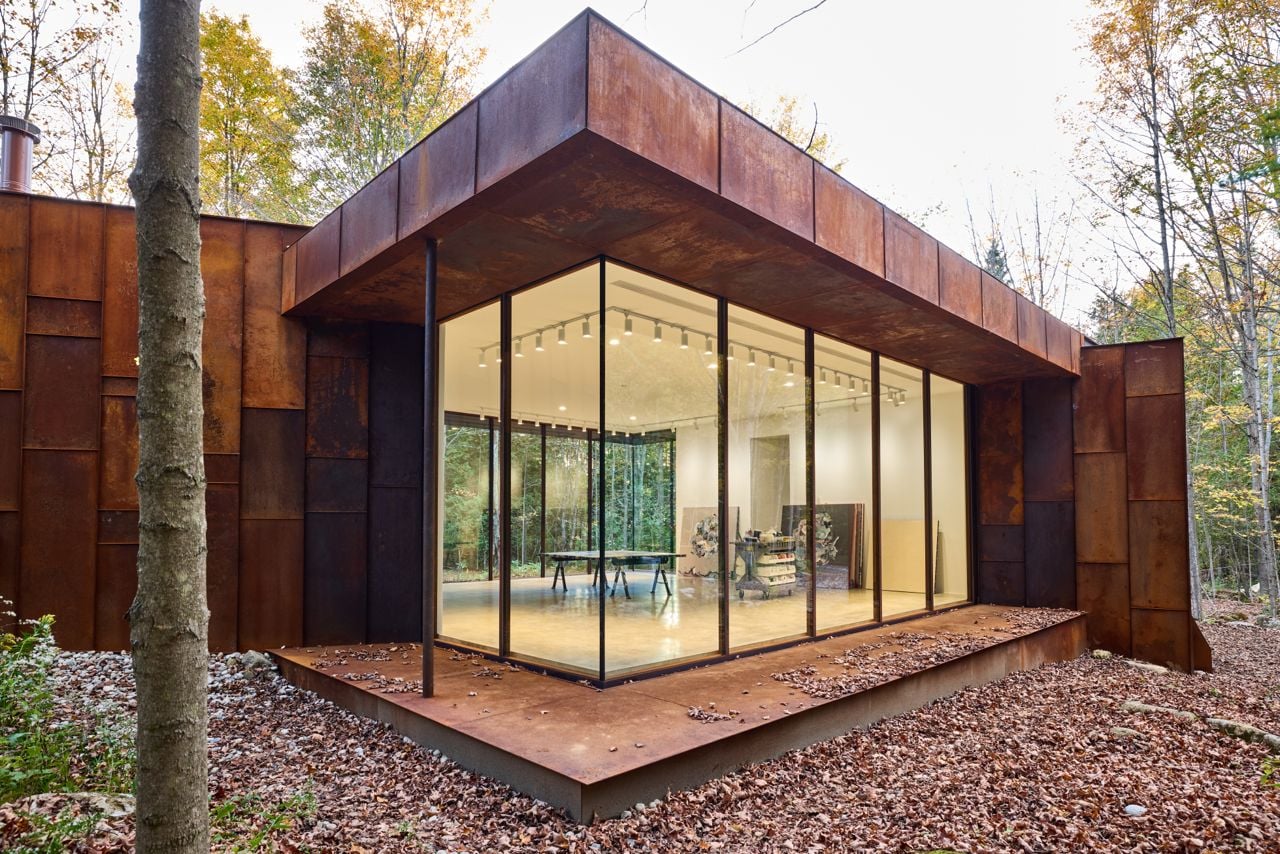
Ten-foot ceilings make the space feel airy, and floor-to-ceiling windows give Watson the sense of being nestled in the heart of the forest. The polished concrete floors recall the rock formations of the nearby escarpment—plus, they’re durable and easy to clean.
In the lounge area, two stainless steel chairs by Canadian designer Paolo Ferrari bring the trees indoors via their reflective surfaces. Although the lounge seats two, Watson confesses that she never brings guests inside the studio. “I really appreciate the solitude,” she says.
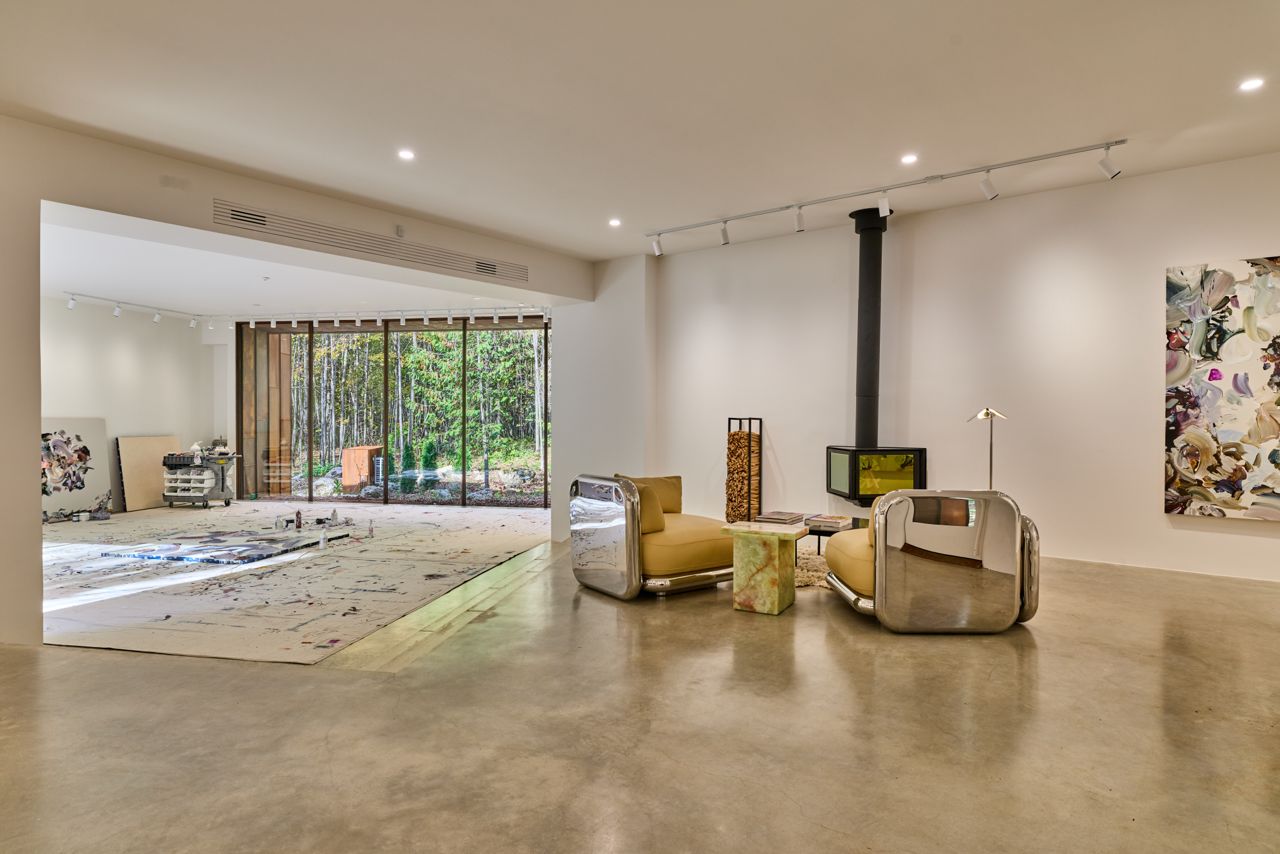
The minimalist lounge area is heated in winter by a triangular wood stove Watson found in Spain. The shape of the stove allows her to see flames from any angle while she’s painting. Next to the wall she uses to photograph her paintings is an upright piano. Growing up, she often played the piano at church, and she has kept up the practice casually as a form of meditation.
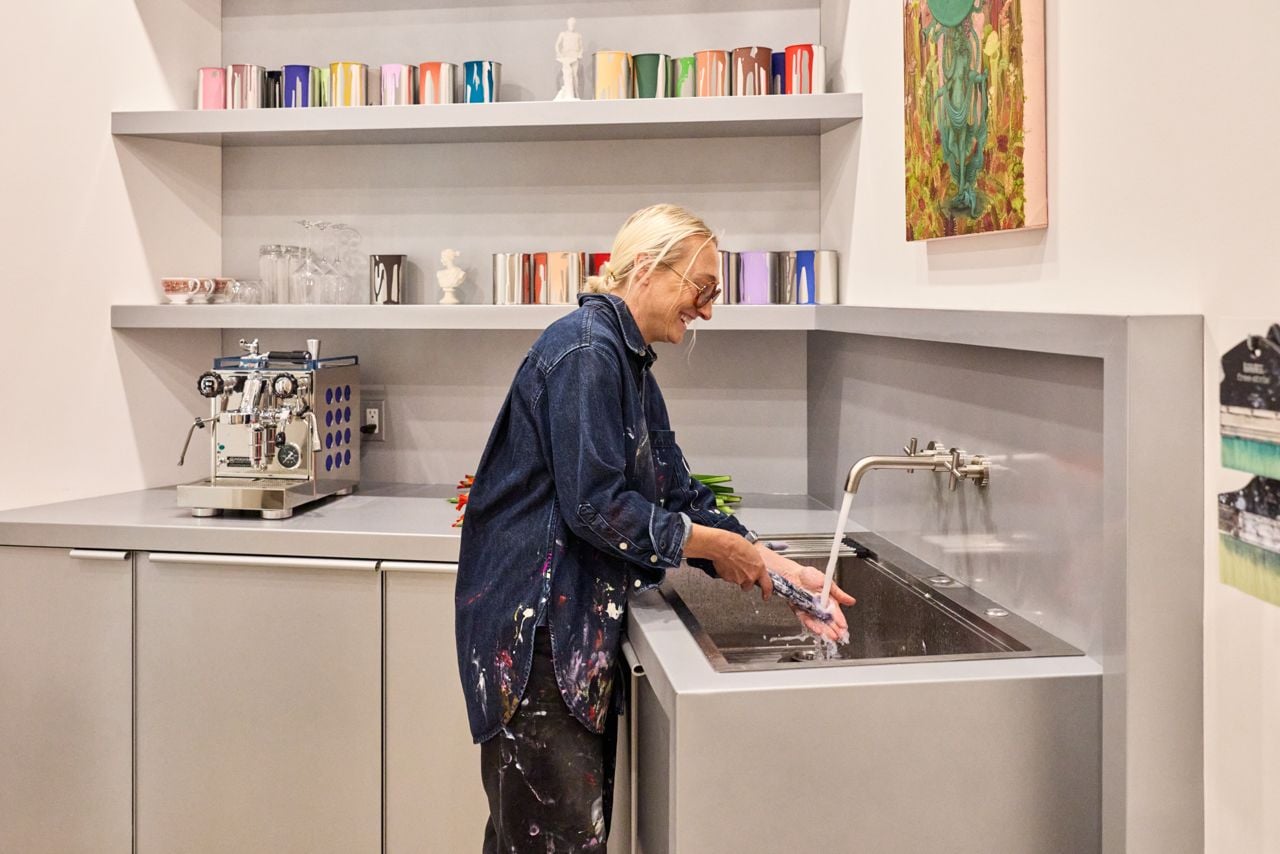
Watson mostly uses the kitchenette for washing brushes and making the occasional espresso. Several Greek busts adorn the shelves, complementing a painting by Montreal-based artist Michelle Nguyen that hangs above the sink, depicting Medusa and a broken mirror. (Watson and Nguyen are both represented by Bau-Xi Gallery.) “I love that the painting feels like a portal,” she says.
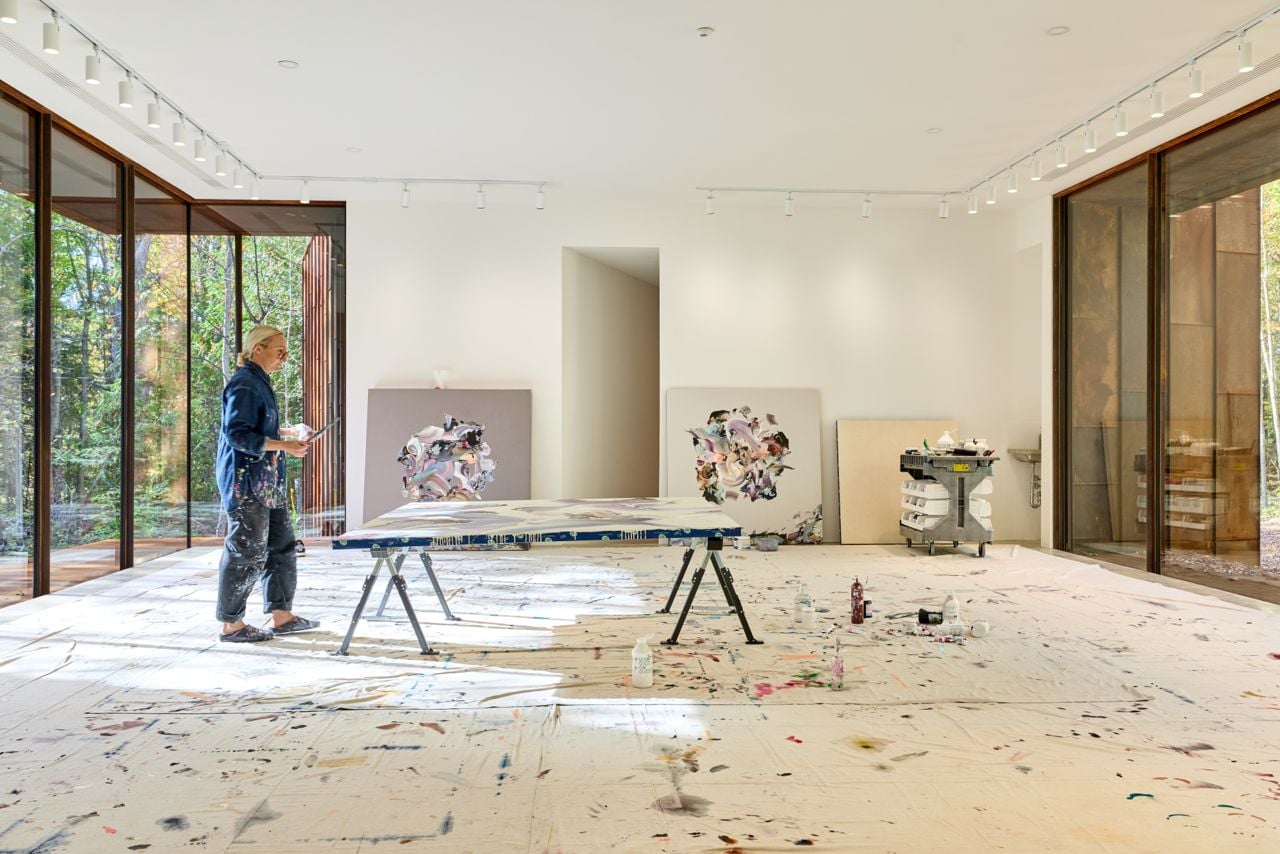
Many of the paintings Watson has made in the studio over the past two years have been collected in a book of her work, Layers of Self, out April 30. The title is apt: working alone in her studio while surrounded by the forest, Watson says, has allowed her to find her way back to herself.